menu

Warehouse Flood Restoration in Riverside | Industrial-Grade Solutions That Minimize Downtime and Protect Your Bottom Line

Liberty Water Damage Restoration Riverside delivers warehouse water mitigation with rapid mobilization, high-capacity extraction systems, and compliance-focused protocols that keep your distribution center operational while protecting inventory, equipment, and structural integrity.

Slider Image 1
Slider Image 2
Slider Image 3
Slider Image 4
Slider Image 5
Slider Image 7
Slider Image 8
Slider Image 9
Slider Image 10
Slider Image 11

Why Warehouse Flooding Threatens Riverside Distribution Operations

Riverside's position in the Inland Empire creates unique flood risks for industrial facilities. Seasonal storm systems converge with the Santa Ana River basin, creating rapid water accumulation in low-lying warehouse districts along the I-215 and SR-60 corridors. When these facilities flood, the financial impact escalates by the hour.

A 50,000 square foot warehouse holding 24 hours of stagnant water faces compromised concrete slab integrity, mold colonization within 48 hours, and potential electrical system failure. The math is brutal. Every hour of halted operations costs money in lost productivity, delayed shipments, and contract penalties. Add in inventory damage, equipment replacement, and potential code violations, and you understand why industrial water damage cleanup requires immediate, large-scale response.

Riverside's clay-heavy soil exacerbates foundation issues. When water saturates the ground beneath your slab, hydrostatic pressure pushes moisture upward through concrete pores. This creates long-term structural concerns beyond the immediate flood event. Distribution center water removal must address both surface water and subsurface moisture migration.

Commercial flood remediation differs fundamentally from residential work. You need teams that mobilize truck-mounted extractors, industrial dehumidifiers rated for 10,000+ square feet, and moisture mapping technology that identifies hidden water pockets in walls and floor systems. Generic restoration companies lack the equipment capacity and operational knowledge to handle warehouse-scale flooding without extending your downtime window.

The warehouse districts near Hunter Industrial Park and the Canyon Springs Commerce Center face additional risk from aging stormwater infrastructure. When municipal systems fail during heavy rain events, your facility becomes the collection point. Industrial flood recovery requires understanding these local drainage patterns and coordinating with city utilities to prevent recurrence while executing the immediate remediation.

Why Warehouse Flooding Threatens Riverside Distribution Operations
How Professional Warehouse Water Mitigation Protects Business Continuity

How Professional Warehouse Water Mitigation Protects Business Continuity

Warehouse flood restoration follows a different protocol than standard water damage work. The scale demands specialized equipment and phased execution that keeps portions of your facility operational during remediation.

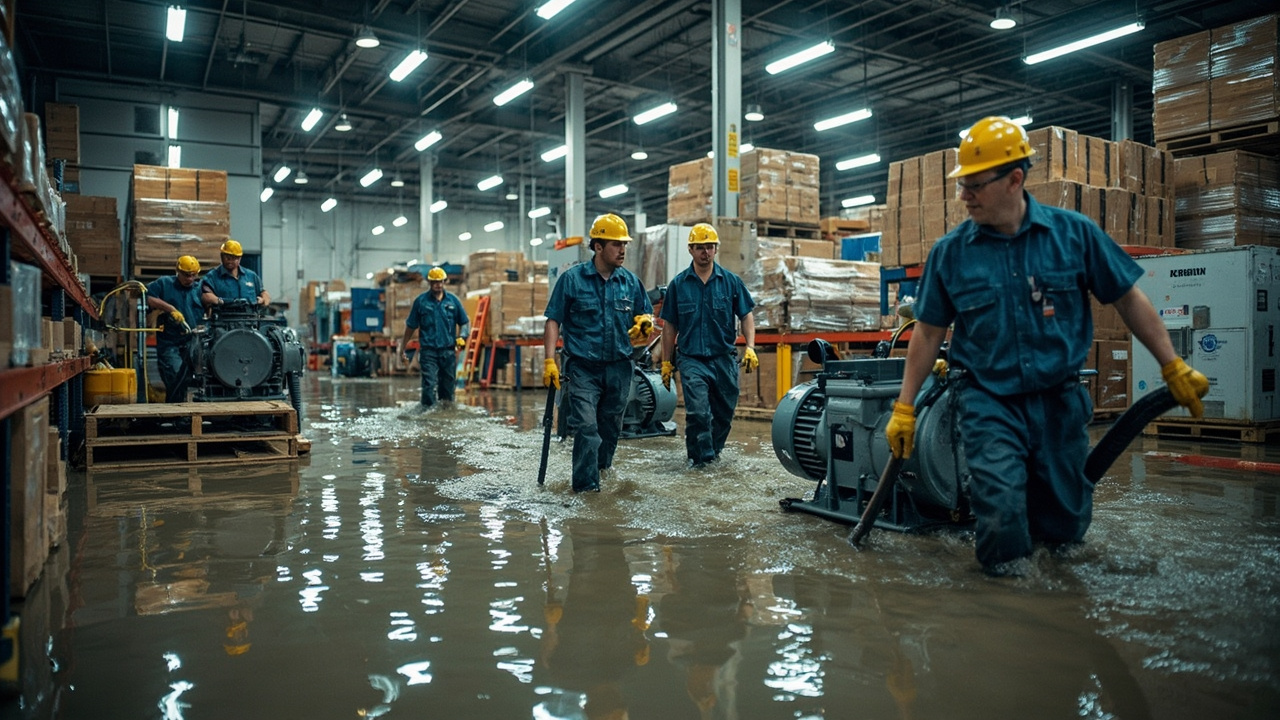
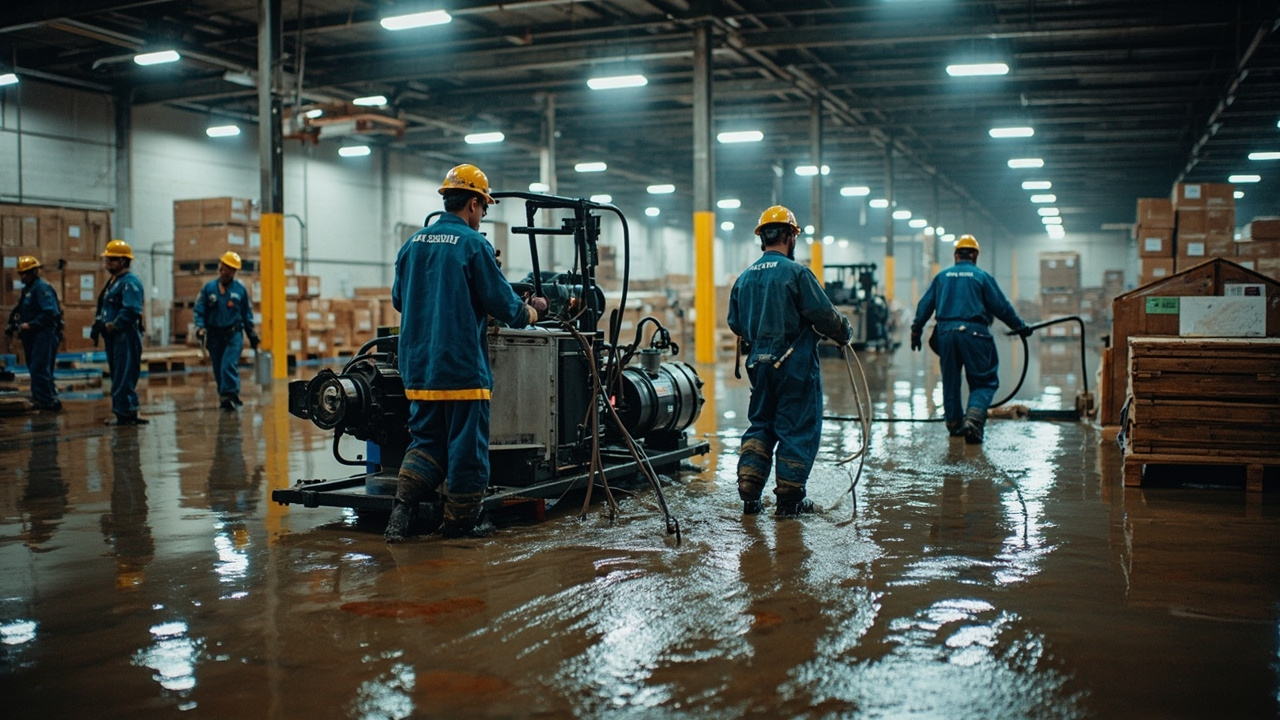
We deploy trailer-mounted vacuum systems capable of extracting 400 gallons per minute. These industrial extractors remove standing water in hours, not days. Simultaneous air mover placement creates directional airflow that pushes moisture toward extraction points while preventing cross-contamination between affected and dry zones.

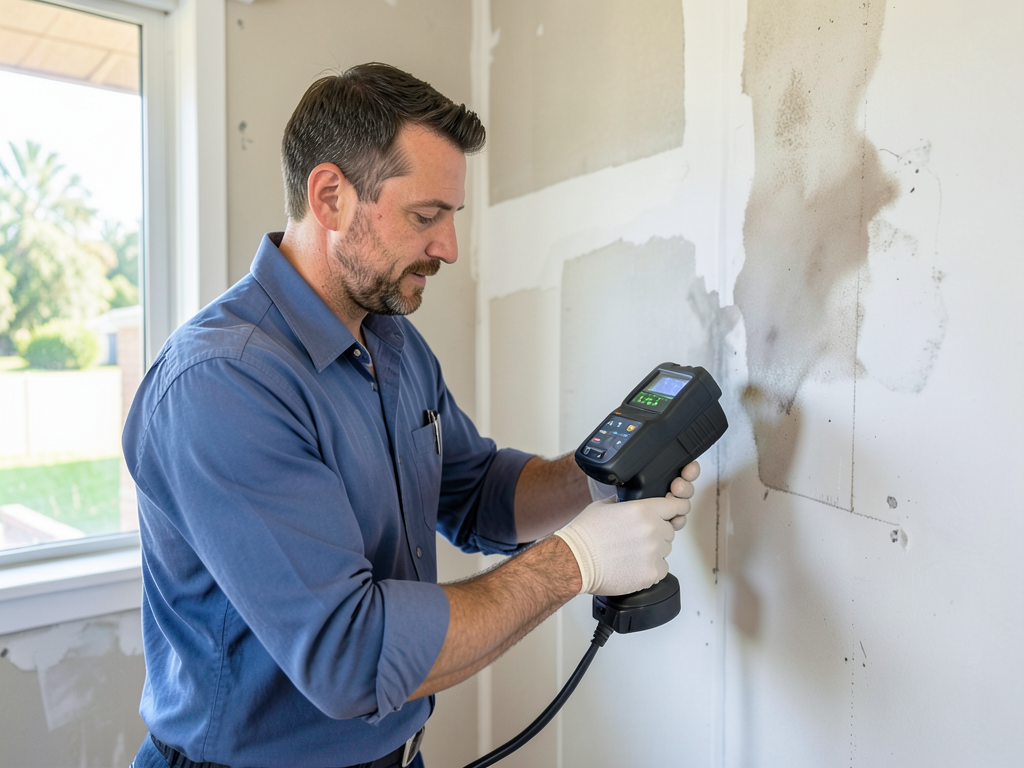
Moisture mapping uses thermal imaging and invasive meters to document water penetration depth in concrete, drywall, and insulation. This data drives the drying strategy and provides documentation for insurance claims and building inspectors. We measure moisture content in substrates every 12 hours, adjusting equipment placement based on drying progress.

Dehumidification in large spaces requires refrigerant units rated for commercial applications. Standard residential units cannot handle the air volume or moisture load. We calculate grain depression and vapor pressure to determine equipment needs, then monitor psychrometric conditions to ensure we hit target drying metrics within your operational timeline.

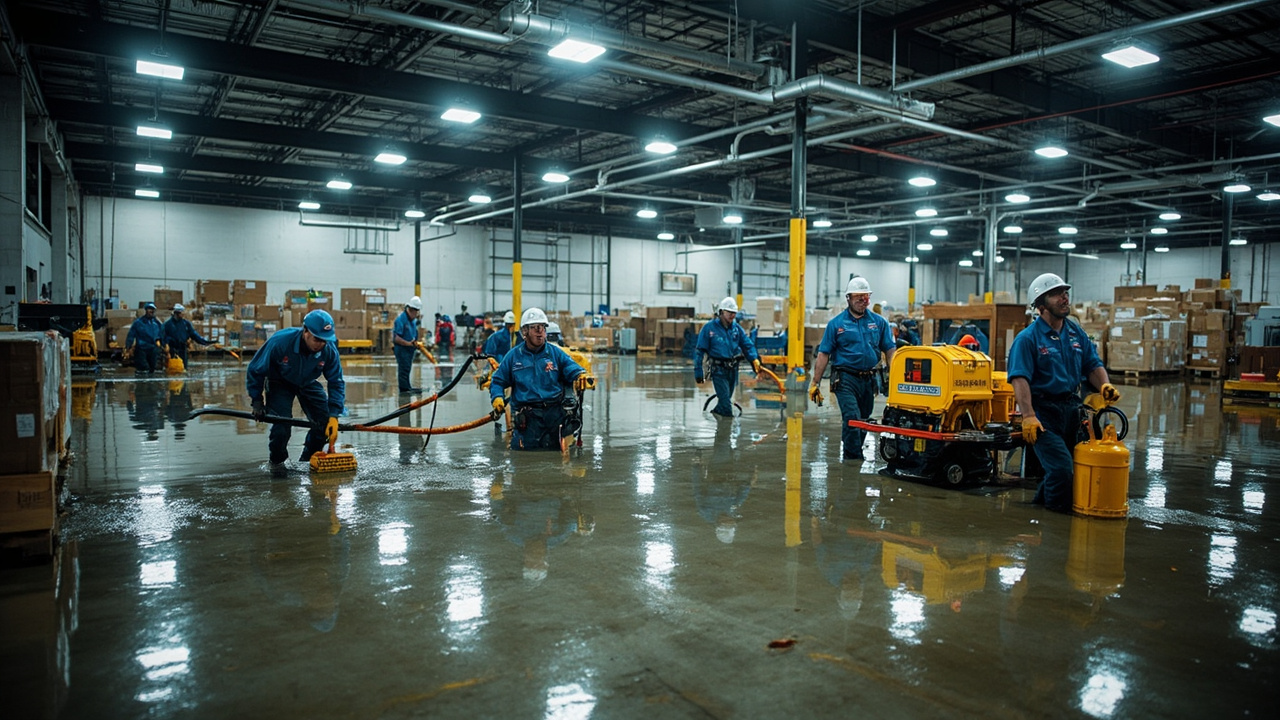
Structural drying in warehouses must account for inventory and racking systems. We coordinate with your operations team to establish work zones, creating containment barriers that isolate wet areas while maintaining access to critical inventory sections. This phased approach prevents total facility shutdown.

Antimicrobial treatment follows water extraction. We apply EPA-registered products to all affected surfaces, preventing mold colonization during the drying phase. This step is non-negotiable in commercial settings where liability exposure and worker safety regulations create legal obligations beyond cosmetic concerns.

Final documentation includes moisture readings, equipment logs, and photographic evidence of pre-loss and post-restoration conditions. This paper trail supports your insurance claim and demonstrates compliance with California building codes for commercial water damage remediation.

What Happens During Emergency Warehouse Response

Warehouse Flood Restoration in Riverside | Industrial-Grade Solutions That Minimize Downtime and Protect Your Bottom Line
01

Immediate Assessment and Containment

Our team arrives with infrared cameras and moisture detection equipment to map the full extent of water intrusion. We identify source points, measure standing water depth, and assess structural damage severity. Immediate containment barriers go up to isolate affected zones from operational areas. We document all findings with time-stamped photos and moisture readings that establish baseline conditions for insurance and compliance reporting.
02

High-Volume Water Extraction

Truck-mounted extractors and portable vacuum systems remove standing water from the facility. We position air movers and commercial dehumidifiers based on airflow modeling that accounts for ceiling height, racking systems, and HVAC interference. Equipment runs continuously with technicians monitoring moisture levels every 12 hours. We coordinate with your team to maintain access to critical inventory sections while executing water removal protocols across the affected footprint.
03

Verification and Operational Handoff

Final moisture readings confirm all substrates have reached acceptable dry standards per IICRC S500 guidelines. We provide a complete documentation package including equipment logs, psychrometric data, and comparison photos showing pre-loss and post-restoration conditions. The facility receives clearance for full operations with recommendations for drainage improvements or structural repairs. All antimicrobial treatments are documented with product specifications and application rates for your environmental health files.

Why Riverside Warehouse Operators Choose Local Industrial Flood Specialists

Liberty Water Damage Restoration Riverside maintains the equipment inventory required for large-scale commercial flood remediation. Most residential-focused companies lack the extraction capacity and dehumidification power needed for warehouse applications. When you call us, you get immediate access to industrial-grade systems without waiting for equipment rentals or third-party subcontractors.

We understand Riverside's commercial building stock. Many warehouse facilities in the Canyon Crest and Arlington districts were built in the 1980s and 1990s with concrete tilt-up construction. These structures require specific drying approaches because moisture migrates differently through tilt-up panels than poured-in-place walls. We adjust our equipment placement and drying timeline based on your building's construction method.

Local code compliance matters. Riverside requires permits and inspections for certain commercial water damage repairs. We coordinate with the city's Building and Safety Division to ensure all work meets municipal requirements. This prevents delays during your insurance claim process and eliminates compliance risks that could trigger operational shutdowns or fines.

Our response time reflects our proximity to major warehouse districts. We maintain service vehicles positioned to reach facilities along the I-215 and SR-60 corridors within 90 minutes of your call. This speed advantage prevents secondary damage progression and shortens your total downtime window.

Insurance coordination is built into our process. We document everything using industry-standard software that insurers recognize and accept. Our estimates include line-item pricing that matches Xactimate coding, eliminating disputes over covered services. We communicate directly with your adjuster to expedite approval and payment processing.

The Riverside industrial community is small. Your reputation depends on reliable vendor partnerships. We have worked with distribution centers, manufacturing facilities, and logistics operations throughout the Inland Empire. These relationships exist because we deliver what we promise without hidden costs or timeline extensions.

What to Expect During Warehouse Flood Restoration

Response and Mobilization Timeline

We dispatch industrial response teams within 90 minutes of your call, arriving with extraction equipment, moisture detection tools, and documentation systems. Initial assessment takes 60 to 90 minutes depending on facility size. Water extraction begins immediately while assessment continues. Standing water removal typically completes within 6 to 12 hours for facilities under 100,000 square feet. Larger operations may require 24-hour extraction with rotating crews. Drying equipment stays on-site for 3 to 7 days with daily monitoring and adjustment. Total restoration timeline depends on water depth, substrate types, and contamination level, but most warehouse operations resume partial functionality within 48 to 72 hours.

Initial Facility Evaluation Process

The site evaluation documents water source, affected square footage, and contamination category per IICRC standards. We use thermal imaging to identify hidden moisture in walls, under racking systems, and within concrete slabs. Moisture meters provide quantitative readings that establish baseline conditions. We photograph all affected areas and inventory damaged materials requiring disposal. The assessment includes electrical system inspection to identify safety hazards and equipment shutdown needs. You receive a written scope of work detailing required services, equipment deployment, and estimated completion timeline. This document serves as your insurance claim foundation and operational planning guide.

Post-Restoration Facility Condition

Completed warehouse water mitigation returns all substrates to pre-loss moisture levels verified by meter readings. All standing water is removed, affected surfaces receive antimicrobial treatment, and humidity levels stabilize within normal parameters. You receive documentation including final moisture readings, equipment operation logs, and photographic evidence showing restoration progress. Any materials requiring replacement due to contamination or structural damage are identified with recommendations for contractors. The facility passes moisture testing standards required by commercial insurers and building codes. Areas affected by water damage are ready for repairs, repainting, or immediate return to service depending on damage severity.

Ongoing Monitoring and Prevention Support

We provide post-restoration moisture monitoring recommendations to ensure substrates remain within acceptable ranges. Follow-up visits can be scheduled at 7 and 14 days after equipment removal to verify no moisture rebound occurs. We offer facility drainage assessments that identify vulnerabilities in your stormwater management and recommend improvements to prevent future flooding events. Our team can coordinate with civil engineers and contractors to implement permanent solutions like sump pump systems, grade modifications, or stormwater redirection. You receive a detailed report outlining all findings and recommendations that supports capital planning and facility improvement budgets.

Frequently Asked Questions

You Have Questions,
We Have Answers

How much does a water restoration company charge? +

Warehouse flood restoration costs vary based on water volume, contamination level, affected square footage, and structural damage. Clean water extraction averages less than sewage remediation. You pay for emergency response, water extraction, drying equipment, antimicrobial treatments, and reconstruction. Industrial facilities in Riverside often face higher costs due to concrete slab drying and equipment relocation. Category 3 water (sewage) requires hazmat protocols and disposal fees. Most commercial policies cover sudden floods but exclude maintenance neglect. Request itemized estimates from three contractors. Costs scale with downtime duration. Faster response reduces secondary damage and total expense.

What's the difference between restoration and remediation? +

Restoration returns your warehouse to pre-loss condition through drying, cleaning, and rebuilding. Remediation removes specific hazards like mold, asbestos, or contaminated materials. You need remediation when floodwater introduces sewage, chemicals, or triggers microbial growth. Restoration follows remediation. A Riverside warehouse flooded with stormwater requires restoration. If that water sat for 72 hours and mold colonized drywall, you need mold remediation first, then restoration. Remediation is hazard-focused and often requires specialized licensing. Restoration is structure-focused. Most commercial flood events require both services sequentially. Clarify scope with your contractor upfront to avoid billing confusion.

How do restoration companies get paid? +

Restoration companies bill through insurance claims, direct invoicing, or financing arrangements. Most work directly with your commercial insurer, submitting estimates and documentation for approval. You pay the deductible upfront. If coverage is denied or insufficient, you receive a direct invoice. Some contractors offer net-30 terms for established businesses. Emergency mitigation often proceeds before full insurance approval to prevent further loss. In Riverside, commercial policies typically cover sudden floods but exclude gradual seepage. Your contractor coordinates with adjusters, provides moisture mapping, and documents all work for claims substantiation. Payment structures depend on policy terms and damage severity.

Is water damage restoration worth it? +

For warehouses, restoration is essential to prevent business interruption, liability exposure, and asset loss. Unmitigated flood damage causes structural decay, mold proliferation, and inventory contamination. Riverside warehouses face dry heat that accelerates mold growth once moisture intrudes. Restoration costs are recoverable through insurance. Ignoring damage voids coverage and triggers OSHA violations if employee health is compromised. The ROI is operational continuity. A 20,000 square foot facility offline for weeks costs more in lost revenue than immediate restoration. Restoration also protects property value and lease compliance. Delay converts a manageable claim into total loss. It is not optional for commercial properties.

Does insurance pay for water restoration? +

Commercial insurance typically covers flood restoration if the loss is sudden and accidental. Policies differentiate between flood insurance and water damage coverage. Riverside warehouses need separate flood policies for natural disasters. Standard commercial policies cover burst pipes, roof leaks, and appliance failures. They exclude groundwater seepage and maintenance neglect. Your insurer pays for mitigation, drying, debris removal, and reconstruction up to policy limits minus your deductible. Coverage requires immediate notification and professional documentation. Adjusters evaluate causation and scope. Delays or DIY attempts often trigger claim denials. Review your policy for exclusions and ensure you maintain required flood coverage if near waterways.

Is the subfloor ruined if it gets wet? +

Warehouse subfloors can survive water exposure if dried within 48 hours. Concrete slabs resist moisture but trapped water beneath causes efflorescence and slab heaving. Wood subfloors swell, warp, and rot. Plywood delaminates. The key is extraction speed and dehumidification. Riverside's low humidity aids drying but does not eliminate risk. Category 3 water contaminates subfloors beyond salvage. Professionals use moisture meters to measure depth penetration. If readings exceed 20 percent moisture content in wood, replacement is necessary. Concrete requires surface grinding if contaminated. Subfloor damage cascades into flooring, equipment, and inventory losses. Immediate professional assessment prevents unnecessary replacement costs.

What are the 4 types of remediation? +

The four remediation types are mold remediation, asbestos abatement, lead paint removal, and hazardous material cleanup. Warehouse floods trigger mold remediation when water sits beyond 48 hours. Older Riverside industrial buildings may contain asbestos insulation or lead paint, requiring licensed abatement if disturbed by flooding. Hazardous material cleanup addresses sewage, chemicals, or fuel contamination. Each type follows EPA and OSHA protocols. Mold remediation uses containment barriers, HEPA filtration, and antimicrobial treatments. Asbestos and lead require certified contractors and air monitoring. Hazmat cleanup involves disposal manifests and decontamination certificates. Your warehouse may need multiple remediation services depending on contamination scope and building age.

What are the 3 R's of recovery? +

The 3 Rs are Remove, Restore, and Rebuild. Remove refers to water extraction and debris clearance. You eliminate standing water, damaged materials, and contamination sources. Restore involves drying, cleaning, and sanitizing salvageable structures and contents. Dehumidifiers, air movers, and antimicrobials return the environment to safe conditions. Rebuild replaces destroyed components like drywall, flooring, and insulation. For Riverside warehouses, the Remove phase is urgent due to rapid microbial growth in warm conditions. Restore preserves property value. Rebuild returns you to operations. This sequence minimizes downtime and prevents compounding losses. Professional contractors manage all three phases under one contract for efficiency.

What are the stages of restoration? +

Restoration progresses through assessment, mitigation, drying, cleaning, and reconstruction. Assessment involves moisture mapping, contamination classification, and loss documentation. Mitigation includes water extraction, power shutdowns, and emergency stabilization. Drying uses industrial dehumidifiers and air movers for 3 to 10 days depending on materials affected. Cleaning removes debris, sanitizes surfaces, and treats for odor. Reconstruction rebuilds structural components and finishes. Riverside warehouse projects often extend drying phases due to concrete slab moisture retention. Each stage requires documentation for insurance and code compliance. Overlapping stages accelerate timelines. Professional project management ensures smooth transitions. The goal is restoring full operational capacity while meeting safety standards.

What is the 80% rule in insurance? +

The 80 percent rule requires you to insure your warehouse for at least 80 percent of its replacement cost to avoid coinsurance penalties. If your building is worth 2 million and you carry only 1 million in coverage, your insurer pays a reduced percentage of claims. This penalizes underinsurance. Riverside commercial properties often appreciate, requiring policy updates. After floods, adjusters verify coverage adequacy. If you fall below 80 percent, you become a coinsurer, splitting costs proportionally. Example, 50 percent coverage means you pay half of every repair dollar. Maintain replacement cost valuations and adjust limits annually to avoid claim shortfalls during restoration.

How Riverside's Santa Ana River Proximity Increases Warehouse Flood Risk

Riverside's warehouse districts sit within the Santa Ana River floodplain, creating elevated risk during winter storm events and spring runoff periods. The river's drainage basin covers 2,650 square miles, funneling water from the San Bernardino Mountains directly through the Inland Empire. When heavy rainfall coincides with snowmelt, the river swells rapidly, overwhelming municipal stormwater systems that serve industrial areas along Van Buren Boulevard and the Sycamore Canyon corridor. Facilities in these zones face water intrusion from surface flooding, backed-up storm drains, and rising groundwater tables that compromise foundation drainage systems. Professional industrial water damage cleanup must account for both immediate water removal and subsurface moisture management to prevent long-term structural damage.

California's Title 24 building codes establish strict requirements for commercial water damage remediation, including mandatory mold prevention protocols and structural drying standards. Riverside building inspectors enforce these regulations during commercial restoration projects, requiring documentation that proves compliance with moisture reduction targets and antimicrobial treatment applications. Local restoration companies familiar with Riverside's Building and Safety Division processes navigate permit requirements and inspection schedules efficiently, preventing delays that extend facility downtime. Our established relationships with local inspectors and insurance adjusters streamline the approval process, reducing administrative friction that can add days to your recovery timeline.
Water Damage Restoration Services in The Riverside Area

We are dedicated to serving the entire Riverside area and its neighboring communities with fast and reliable water damage restoration services. Whether you’re a resident or a business owner, our team is ready to respond to your call. Use the map below to see our service area, or call us directly to confirm if we can dispatch a team to your location for an immediate emergency response.

Address:
Liberty Water Damage Restoration Riverside, 11801 Pierce St, Riverside, CA, 92505

Additional Services We Offer

Our news updates

Latest Articles & News from The Blogs

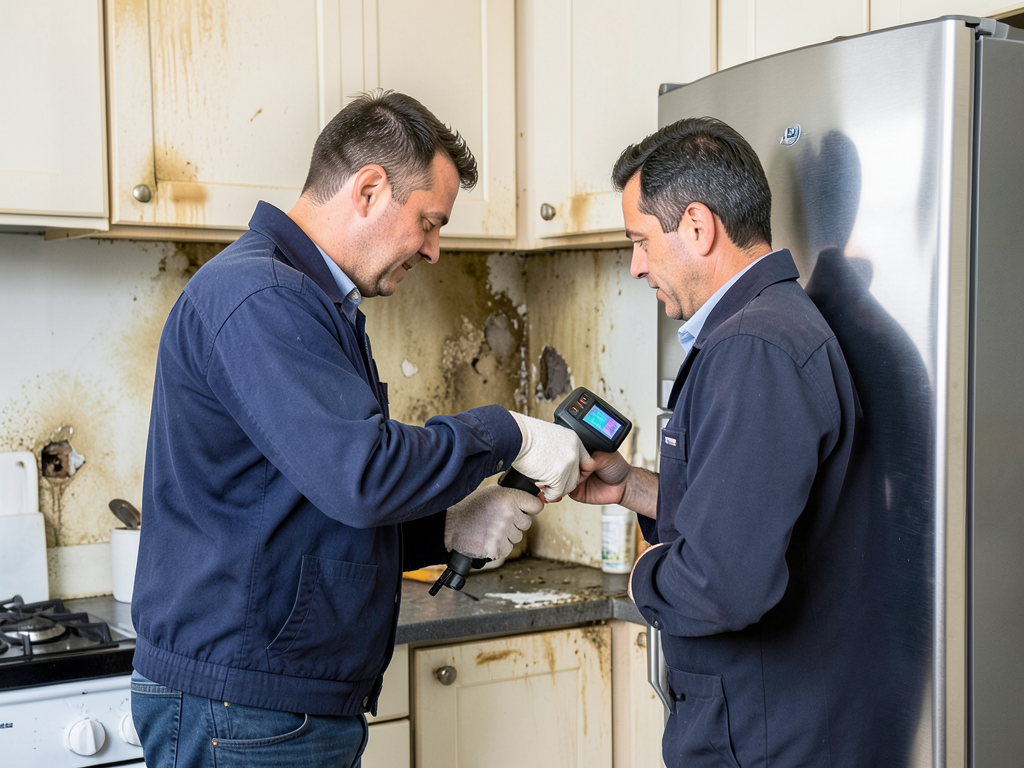
Why your ice maker line is a ticking time bomb for your kitchen floor Ice maker supply lines are one…

Why your ice maker line is a ticking time bomb for your kitchen floor

Why your ice maker line is a ticking time bomb for your kitchen floor Ice maker supply lines are one…

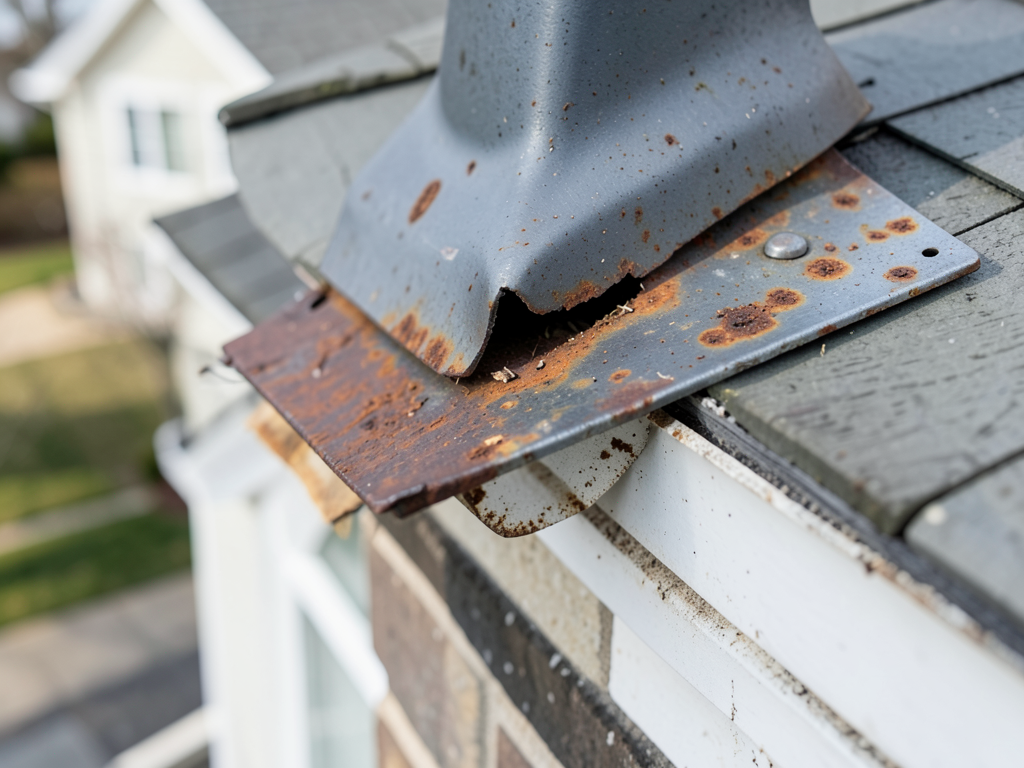
How to spot the signs of a chimney leak before it ruins your Riverside living room

How to spot the signs of a chimney leak before it ruins your Riverside living room Your chimney is more…

The most common plumbing mistakes Riverside DIYers make that lead to floods

The most common plumbing mistakes Riverside DIYers make that lead to floods DIY plumbing projects in Riverside often start with…

Contact Us

Every hour of warehouse downtime compounds your financial losses. Call Liberty Water Damage Restoration Riverside at (951) 309-5499 for immediate industrial flood response. Our teams mobilize within 90 minutes with the high-capacity equipment your facility needs. Available 24/7 for emergency warehouse water mitigation throughout the Inland Empire.