menu

Hardwood Floor Water Damage in Riverside – Expert Restoration That Saves Your Floors Before Cupping and Warping Set In

We deploy advanced moisture detection and rapid drying systems to stop hardwood floor water damage in its tracks, preventing permanent cupping, buckling, and mold growth that ruins floors and drives up replacement costs across Riverside.

Slider Image 1
Slider Image 2
Slider Image 3
Slider Image 4
Slider Image 5
Slider Image 7
Slider Image 8
Slider Image 9
Slider Image 10
Slider Image 11

Why Hardwood Floors Fail Fast After Water Exposure in Riverside Homes

Water damaged wood floors deteriorate faster than most homeowners realize. In Riverside, the challenge intensifies during our wet winter months when saturated soil pushes groundwater through foundation slabs, flooding basements and crawl spaces where many homes have installed hardwood flooring. The Santa Ana River corridor neighborhoods see this pattern repeat every rainy season.

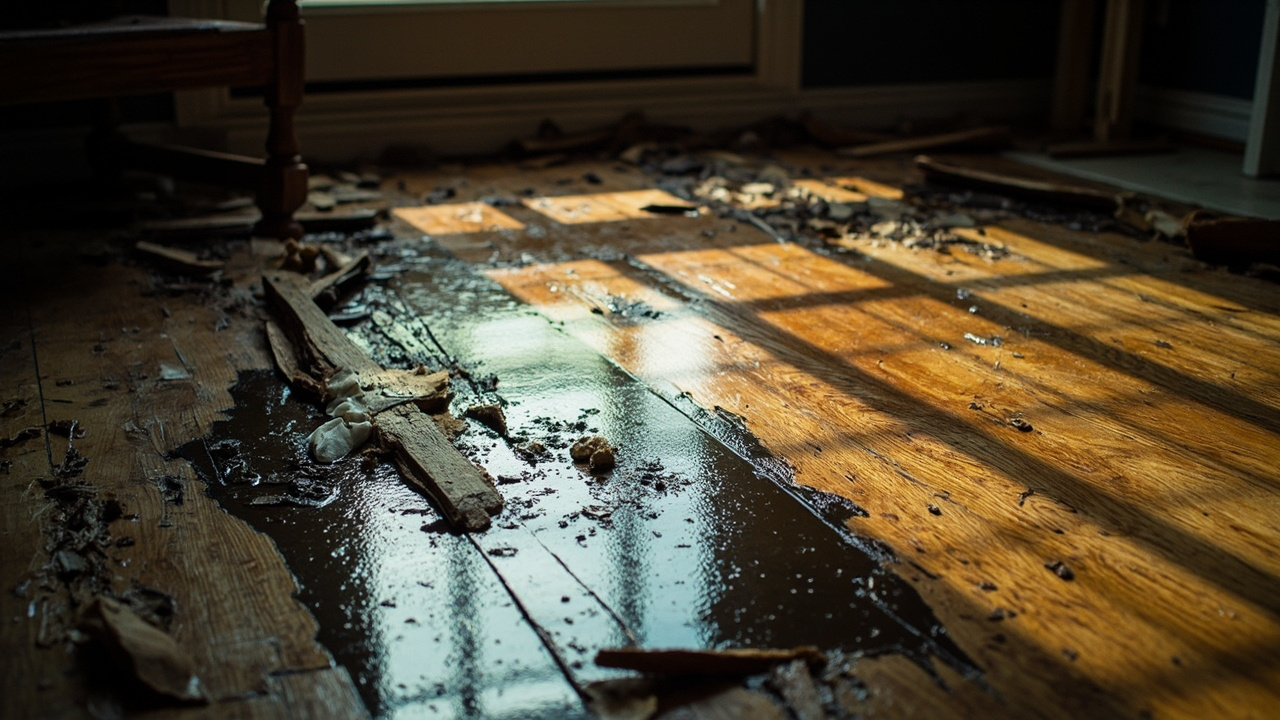
Wet hardwood flooring absorbs moisture through the grain, expanding at different rates depending on wood species and finish type. Oak and maple floors, common in Riverside's Mission Grove and Canyon Crest neighborhoods, cup within 48 hours of saturation. The edges lift while the center stays flat, creating a washboard texture you can feel underfoot. Prolonged exposure causes boards to crown, buckle entirely, or develop black staining from mold colonies growing in the subfloor.

Hardwood floor cupping starts as a cosmetic issue but signals deeper structural problems. Water migrates through plank seams into the plywood underlayment, weakening adhesive bonds and creating voids where bacteria thrive. You might notice a musty smell before you see visible damage. That odor means microbial growth has started, releasing spores that circulate through your HVAC system.

Wood floor water damage repair becomes exponentially more expensive after the first 72 hours. Boards that could have been saved through proper drying hardwood floors techniques now require replacement. The subfloor might need remediation. What started as a small leak under your kitchen sink in your Orangecrest home spreads across 200 square feet of premium hardwood, turning a manageable repair into a full restoration project.

Why Hardwood Floors Fail Fast After Water Exposure in Riverside Homes
How We Stop Water Damage and Reverse Hardwood Floor Cupping

How We Stop Water Damage and Reverse Hardwood Floor Cupping

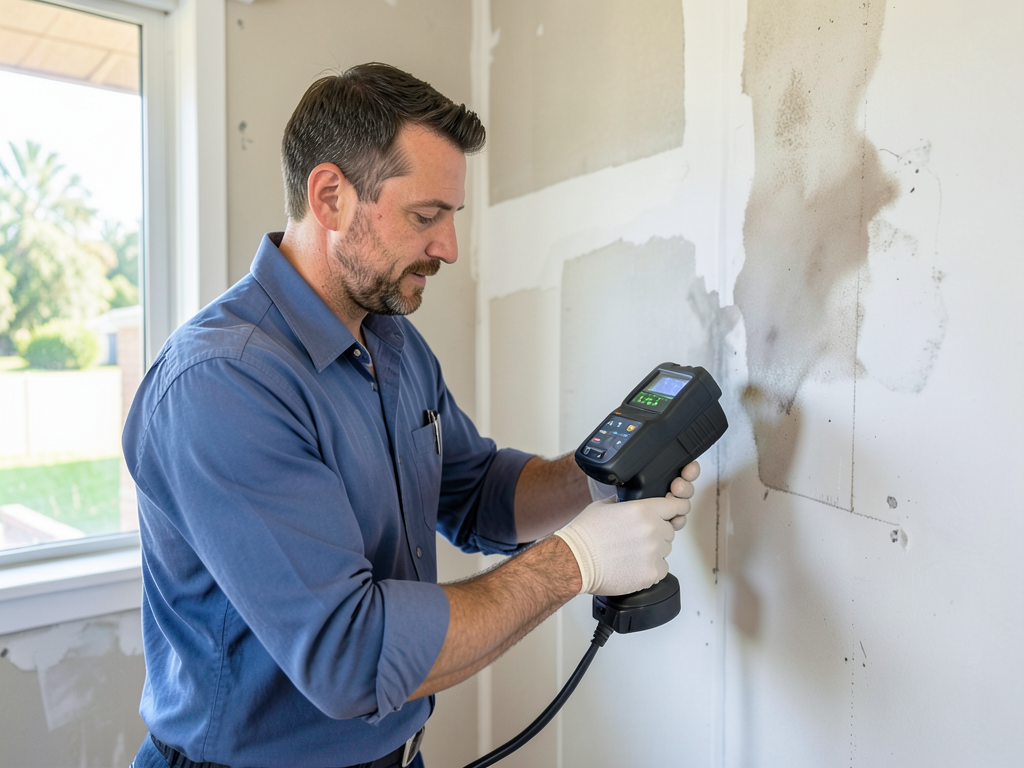
Drying hardwood floors requires precision equipment and an understanding of wood moisture dynamics. We do not just run fans and hope for the best. Our process starts with thermal imaging cameras that map moisture pockets invisible to the naked eye. These cameras reveal saturation patterns in your subfloor and identify which boards absorbed water and which stayed dry.

We measure moisture content using pin-type and pinless meters calibrated for different wood species. Red oak has a different equilibrium moisture content than Brazilian cherry. We adjust our drying protocols based on the wood type, finish coating, and installation method in your specific Riverside home. Nail-down floors dry differently than floating floors. Engineered hardwood responds differently than solid planks.

Our truck-mounted extraction systems pull standing water before it penetrates deeper. Then we deploy low-grain refrigerant dehumidifiers that remove moisture from the air faster than conventional units. These industrial LGR dehumidifiers create a vapor pressure differential that pulls moisture out of the wood grain and into the air, where we capture and remove it. Air movers positioned at strategic angles accelerate evaporation without over-drying surface layers, which would cause new cracking.

For severe hardwood floor cupping, we use mat drying systems. These sealed mats attach directly to the floor surface, creating negative pressure zones that extract moisture through the wood face rather than waiting for it to evaporate naturally. This targeted approach saves boards that would otherwise require replacement.

We monitor progress every 12 hours, adjusting equipment placement and dehumidification rates as moisture levels drop. The goal is controlled, gradual drying that allows wood fibers to relax back into their original position without splintering or checking.

What Happens During Your Hardwood Floor Water Damage Restoration

Hardwood Floor Water Damage in Riverside – Expert Restoration That Saves Your Floors Before Cupping and Warping Set In
01

Emergency Water Extraction

We arrive within two hours of your call and immediately remove standing water using truck-mounted extractors that pull 300 gallons per hour. Our technicians document moisture readings at multiple floor locations, photograph the damage extent, and identify the water source. We shut off supply lines, contain the affected area with plastic sheeting, and begin pulling baseboards to access wall cavities where water often hides. This first response determines whether your hardwood can be saved or requires replacement.
02

Controlled Drying Protocol

We position low-grain refrigerant dehumidifiers and axial air movers in a cross-flow pattern that maximizes evaporation without creating hot spots that split wood fibers. Our equipment runs continuously for three to seven days depending on initial moisture readings and wood species. We monitor moisture levels twice daily using penetrating and non-invasive meters, adjusting airflow direction and dehumidifier settings as the wood releases trapped water. This phase requires patience because rushing the process causes permanent board damage.
03

Final Inspection and Restoration

Once moisture readings stabilize at or below 12 percent, we evaluate floor condition. Minor cupping often resolves itself as the wood acclimates back to normal humidity levels. We sand and refinish boards that show surface staining but remain structurally sound. Severely damaged planks get replaced with matching wood species and stain. We reinstall baseboards, apply finish coats, and provide documentation showing final moisture readings for your insurance claim. Your floor returns to pre-loss condition with no evidence of water intrusion.

Why Riverside Homeowners Choose Liberty Water Damage Restoration for Hardwood Floor救Recovery

Wet hardwood flooring repair requires local knowledge that out-of-area franchises lack. We understand how Riverside's specific soil composition affects foundation moisture. The alluvial soils along the Santa Ana River retain water differently than the decomposed granite in the La Sierra hills. This geological variation changes how water enters your home and saturates your floors.

We work directly with Riverside's most active insurance adjusters and know which documentation they require for hardwood floor water damage claims. Our moisture mapping reports and daily progress photos satisfy even the strictest adjuster requirements, reducing claim disputes and speeding your reimbursement. We communicate directly with your insurance company, handling the technical explanations so you do not have to translate water damage terminology.

Our equipment inventory includes specialized tools most restoration companies skip because of cost. The mat drying systems we use for severe cupping run $15,000 per unit. Thermal imaging cameras cost another $8,000. We invested in this technology because half-measures do not save hardwood floors. When your Canyon Crest home floods at 2 AM, you need a company with industrial-grade extraction equipment already mounted in the truck, not a crew that rents consumer-grade shop vacs from the hardware store.

Liberty Water Damage Restoration Riverside maintains relationships with local hardwood suppliers who stock matching materials for homes built across different decades. Finding exact stain matches for 1980s oak floors in Orangecrest or sourcing discontinued Brazilian cherry for a 2005 Alessandro Heights custom home requires local supplier networks. We have those connections because we have worked in this market for years, not months.

We pull permits when required, coordinate with city inspectors, and ensure all work meets current California building codes for moisture barriers and subfloor ventilation.

What You Can Expect During Your Hardwood Floor Water Damage Restoration

Response Time and Availability

We answer emergency calls 24 hours a day, seven days a week, including holidays. Our average response time to Riverside addresses is 90 minutes from your initial call. We dispatch crews immediately, not after a scheduler calls you back during business hours. When you call at 3 AM because your water heater burst and flooded your hardwood floors, you get a live person who can authorize an emergency crew, not a voicemail system. Our trucks carry enough extraction equipment, dehumidifiers, and air movers to start work immediately without waiting for equipment deliveries. Speed matters because every hour of delayed response increases the likelihood of permanent floor damage and mold growth.

Initial Assessment Process

Our lead technician conducts a room-by-room inspection using thermal imaging to identify all affected areas, including hidden moisture in walls and subfloors. We measure moisture content at dozens of points across your hardwood surface, creating a detailed map that shows saturation gradients. This data determines which boards can be saved and which require replacement. We photograph everything for insurance documentation and explain exactly what we found in plain language you can understand. You receive a written scope of work before any equipment gets placed, outlining the drying timeline, expected outcomes, and what you need to do to prepare your home. We never start work without your clear understanding and approval.

Quality of Final Results

We aim to return your hardwood floors to their pre-damage condition, which means matching grain patterns, stain colors, and finish sheens exactly. Our refinishing work blends seamlessly with surrounding boards so you cannot identify which sections we replaced. We use dustless sanding equipment that contains 99 percent of particles, protecting your furniture and HVAC system from contamination. Final moisture readings get documented and provided to you and your insurance company as proof of complete drying. We do not consider a job complete until moisture levels stabilize within the normal range for your wood species and your floor passes our final inspection for cupping, crowning, or surface defects.

Post-Restoration Support

After restoration, we provide specific care instructions for your refinished hardwood, including how long to wait before replacing furniture and what cleaning products to use. We schedule a follow-up inspection 30 days after completion to verify that moisture levels remain stable and no delayed cupping has developed. If any boards show problems during this monitoring period, we address them at no additional charge. You also receive our direct phone number for any questions about floor care, unusual odors, or concerns about recurring moisture. We do not disappear after collecting payment. Our reputation depends on long-term results, not quick turnarounds that fail six months later when hidden moisture finally surfaces.

Frequently Asked Questions

You Have Questions,
We Have Answers

What happens if hardwood flooring gets wet? +

Hardwood absorbs water and swells, causing cupping, buckling, and warping. The finish may bubble or peel. Within hours, moisture seeps into the tongue-and-groove joints, loosening planks. In Riverside's dry climate, the rapid shift from wet to dry accelerates cracking and splitting. Mold can colonize within 24 to 48 hours in the subfloor. If water sits longer than a few hours, structural integrity weakens. You need immediate extraction and dehumidification. Standing water on hardwood is a race against permanent damage. The longer it sits, the more boards you will replace.

Will a swollen wood floor go back to normal? +

Minor swelling may reverse if you dry the floor quickly. Remove all water, run dehumidifiers, and circulate air with fans. In Riverside's low humidity, drying happens faster than in coastal areas, but do not rush it. Floors need gradual drying to avoid surface checking. If cupping is mild and moisture content drops to 6 to 9 percent, boards may flatten over weeks. Severe swelling with buckling or crowning rarely self-corrects. Boards that stay swollen after drying need replacement or sanding. Time matters. Act within hours to improve your odds.

How to flatten a wood floor after water damage? +

You cannot flatten water damaged hardwood until it dries completely. Use industrial dehumidifiers and air movers for three to seven days. Check moisture content with a meter. Levels should match your subfloor. Once dry, assess the damage. Minor cupping may resolve with sanding and refinishing. Severe buckling or crowned boards need replacement. In Riverside, the arid climate helps, but do not skip the drying phase. Rushing to sand wet wood traps moisture and causes future problems. Flattening is the last step, not the first.

Does homeowners insurance cover water damage to hardwood floors? +

Coverage depends on your policy and the water source. Homeowners insurance typically covers sudden, accidental damage like burst pipes or appliance leaks. It excludes gradual leaks, neglect, or flood damage. In Riverside, where flash flooding can occur near the Santa Ana River, you need separate flood insurance for natural water intrusion. Review your policy for wood floor exclusions. Some insurers limit claims on hardwood. Document damage immediately with photos. Your adjuster will assess whether the damage qualifies. Filing fast improves your claim outcome.

Can a wood floor be fixed after water damage? +

Yes, but the extent depends on exposure time and water type. Surface water caught within hours may only need drying and refinishing. Prolonged soaking warps boards beyond repair. You will need to remove and replace damaged sections. Clean water is easier to remediate than sewage or contaminated water. In Riverside, subfloor moisture from slab leaks is common due to clay soil shifts. Professionals assess moisture depth, replace unsalvageable boards, and match stain and finish. Partial repairs are possible if damage is localized. Total replacement is rare unless flooding was catastrophic.

Can mold grow under hardwood floors? +

Yes. Mold thrives in the dark, damp space between hardwood and the subfloor. It starts growing within 24 to 48 hours after water exposure. You will not see it on the surface until it spreads. In Riverside, low humidity slows growth slightly, but moisture trapped under flooring creates a microclimate. Signs include musty odors, black staining on board undersides, or visible growth along seams. Mold compromises indoor air quality and wood structure. Remove affected boards and treat the subfloor with antimicrobial solutions. Drying alone does not kill spores.

How much does it cost to repair a water damaged hardwood floor? +

Costs vary by damage severity, square footage, and wood type. Minor drying and refinishing runs a few hundred dollars per room. Replacing damaged boards costs more, especially for exotic or discontinued species. Subfloor repairs add to the bill. In Riverside, labor rates and material availability affect pricing. Expect higher costs if mold remediation is needed. Insurance may cover some expenses if the damage qualifies. Get multiple estimates. Professionals assess moisture levels and provide itemized quotes. Acting fast reduces costs by minimizing the number of boards you replace.

What do water damaged hardwood floors look like? +

Water damaged hardwood shows cupping, where edges rise higher than the center. Buckling lifts entire boards off the subfloor. You will see dark stains, white watermarks, or discoloration. The finish may crack, bubble, or peel. Warping creates gaps between planks. In severe cases, boards crown with centers higher than edges. Riverside homes with older finishes may show damage faster. You might notice a spongy feel underfoot or hear squeaking. Mold appears as black or green spots along seams. Visual cues tell you how deep the damage goes.

Is there a way to reverse water damage on wood? +

Reversing water damage depends on how fast you act. Immediate extraction and drying can prevent permanent warping. Sand and refinish boards with surface staining or minor cupping. Deep damage like splitting, severe warping, or mold colonization cannot be reversed. Replacement is your only option. In Riverside, rapid drying due to low humidity helps, but you must start within hours. Once wood fibers break down or mold sets in, restoration is impossible. The key is speed. Water damage is progressive. The clock starts the moment water touches your floor.

How to unswell a wooden floor? +

Unswelling requires complete drying and time. Remove all water, run commercial dehumidifiers, and circulate air with fans. Monitor moisture levels with a meter. Hardwood in Riverside should dry to 6 to 9 percent moisture content. This can take three to seven days. Once dry, minor swelling may reverse as fibers contract. Severe swelling needs board replacement. Do not apply heat directly. It causes surface cracking. Gradual drying is safer. If boards remain swollen after drying, sand them flat or replace them. Unswelling is passive. You cannot force it.

How Riverside's Winter Rain Patterns and Soil Composition Accelerate Hardwood Floor Water Damage

Riverside receives 85 percent of annual rainfall between November and March, creating concentrated periods when saturated soils push hydrostatic pressure against foundation slabs and basement walls. The alluvial deposits along the Santa Ana River corridor absorb and hold water for weeks after heavy rain events, slowly releasing it into crawl spaces and through concrete cracks. Homes in Orangecrest, Alessandro Heights, and Mission Grove sit on these moisture-retaining soils, making them particularly vulnerable to groundwater intrusion that saturates hardwood floors from below. This seasonal flooding pattern means wet hardwood flooring incidents spike during January and February, exactly when humidity levels already stress wood moisture equilibrium.

Wood floor water damage repair in Riverside must account for local building practices and code requirements specific to California's seismic and moisture regulations. Many homes built before 2000 lack proper vapor barriers under hardwood installations, violating current standards but grandfathered under old permits. We work with Riverside's building inspectors regularly and understand which repairs trigger permit requirements and which fall under maintenance exemptions. This local regulatory knowledge prevents project delays and ensures your restoration meets current code, protecting your home value and future sale prospects. Choosing a restoration company familiar with Riverside's specific permit processes and inspector expectations eliminates the compliance headaches that plague out-of-area contractors.
Water Damage Restoration Services in The Riverside Area

We are dedicated to serving the entire Riverside area and its neighboring communities with fast and reliable water damage restoration services. Whether you’re a resident or a business owner, our team is ready to respond to your call. Use the map below to see our service area, or call us directly to confirm if we can dispatch a team to your location for an immediate emergency response.

Address:
Liberty Water Damage Restoration Riverside, 11801 Pierce St, Riverside, CA, 92505

Additional Services We Offer

Our news updates

Latest Articles & News from The Blogs

Why your ice maker line is a ticking time bomb for your kitchen floor Ice maker supply lines are one…

Why your ice maker line is a ticking time bomb for your kitchen floor

Why your ice maker line is a ticking time bomb for your kitchen floor Ice maker supply lines are one…

How to spot the signs of a chimney leak before it ruins your Riverside living room

How to spot the signs of a chimney leak before it ruins your Riverside living room Your chimney is more…

The most common plumbing mistakes Riverside DIYers make that lead to floods

The most common plumbing mistakes Riverside DIYers make that lead to floods DIY plumbing projects in Riverside often start with…

Contact Us

Water does not wait, and neither should you. Call Liberty Water Damage Restoration Riverside at (951) 309-5499 right now for emergency response. Our crews are standing by with industrial extraction and drying equipment ready to deploy to your Riverside home today.