

menu

Business Interruption Mitigation in Riverside | Restore Operations Within Hours, Not Days

Liberty Water Damage Restoration Riverside deploys rapid containment protocols and industrial-grade extraction systems to keep your business operational during emergency water damage restoration.

Slider Image 1
Slider Image 2
Slider Image 3
Slider Image 4
Slider Image 5
Slider Image 7
Slider Image 8
Slider Image 9
Slider Image 10
Slider Image 11

Why Water Damage Threatens Your Riverside Business Operations

Riverside businesses face unique vulnerabilities when water damage occurs. The city's location near the Santa Ana River and proximity to multiple irrigation districts creates elevated flood risk during winter storm events. Add the region's aging commercial infrastructure along University Avenue and Market Street, and you have a recipe for catastrophic operational disruptions.

When water infiltrates your facility, the clock starts immediately. Inventory becomes unsalvageable. Equipment malfunctions. Employees cannot work safely. Customer appointments get canceled. Every hour of downtime translates directly to lost revenue and damaged client relationships.

Commercial property in downtown Riverside experiences compounding problems. Many buildings in the historic districts use concrete slab foundations that trap moisture, creating hidden damage beneath flooring systems. Box Canyon's industrial zones house sensitive manufacturing equipment vulnerable to even minor water intrusion. The result is extended downtime if restoration teams lack experience with minimizing business downtime through strategic damage control.

The financial impact accelerates rapidly. A restaurant loses perishable inventory within hours. A medical office faces HIPAA compliance issues if patient records get compromised. A retail store must redirect customers to competitors. Most businesses cannot absorb more than 72 hours of closure without significant financial strain.

Business continuity restoration requires more than simply extracting water. It demands immediate triage of critical operational areas, protection of undamaged zones, and phased restoration that allows partial operations to resume while repairs continue. Without this approach, you face complete shutdown for weeks instead of segmented disruption measured in days.

Why Water Damage Threatens Your Riverside Business Operations
Strategic Containment Protocols That Protect Revenue Streams

Strategic Containment Protocols That Protect Revenue Streams

Liberty Water Damage Restoration Riverside deploys a zone-based containment strategy that differs fundamentally from residential approaches. We establish negative air pressure barriers using commercial air scrubbers with HEPA filtration to isolate affected areas from operational spaces. This allows your staff to continue working in unaffected sections while we execute extraction and drying protocols in damaged zones.

Our industrial extraction equipment removes standing water at rates exceeding 200 gallons per minute. We use truck-mounted systems rather than portable units because extraction speed directly determines how quickly you can resume operations. Faster water removal means less time waiting for structural drying to reach acceptable moisture levels.

We prioritize critical infrastructure first. Server rooms receive immediate attention with desiccant dehumidification that removes moisture without raising temperatures. Production floors get cleared and dried using axial air movers positioned to maximize airflow across equipment bases. Customer-facing areas receive priority restoration to maintain your public image and prevent revenue loss from closed storefronts.

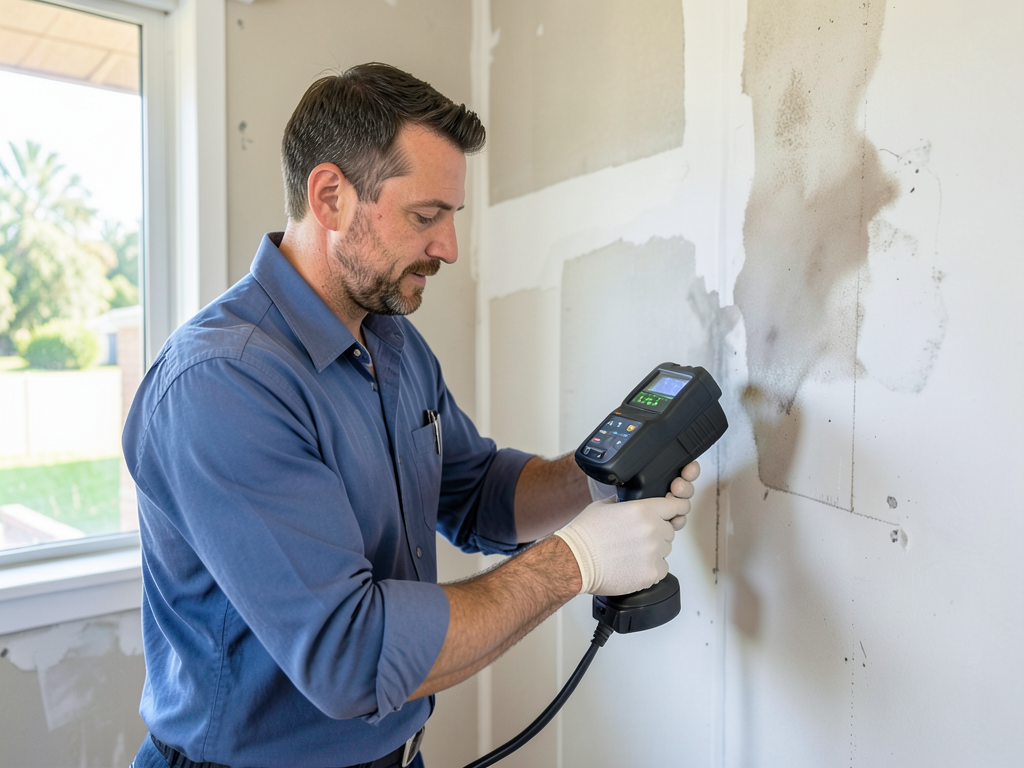
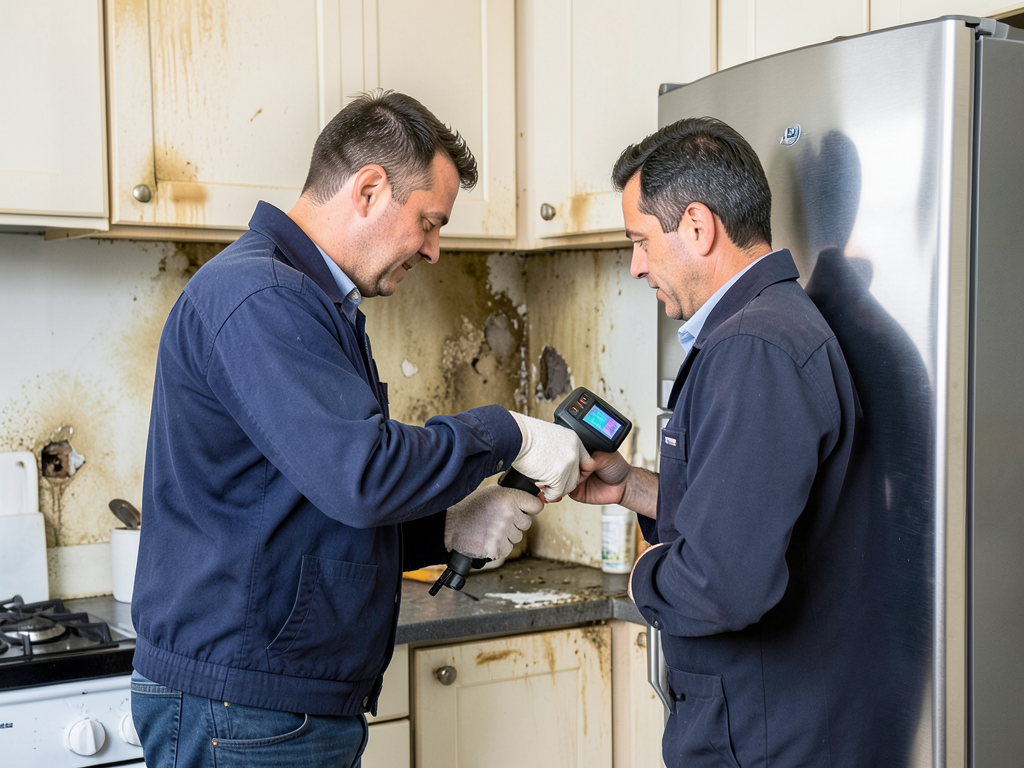
Thermal imaging identifies moisture trapped in wall cavities and beneath flooring without destructive investigation. We map moisture levels using grid-based readings that track drying progress in real time. This data-driven approach eliminates guesswork and provides documentation for insurance claims and liability protection.

Our teams work extended shifts to compress timelines. A standard residential job might proceed during business hours over five days. For commercial clients focused on reducing operational downtime, we deploy night crews and weekend teams to complete restoration during off-hours whenever possible. This approach keeps disruption contained and gets you back to full capacity faster.

How We Execute Rapid Commercial Water Restoration

Business Interruption Mitigation in Riverside | Restore Operations Within Hours, Not Days
01

Emergency Response and Damage Assessment

We arrive within 60 minutes to assess damage scope and establish containment zones. Our technicians identify water source, categorize contamination level, and map affected areas using moisture meters and thermal cameras. You receive an immediate action plan that outlines which spaces can remain operational and projected timelines for full restoration. This initial assessment forms the foundation for minimizing business downtime through strategic resource allocation.
02

Containment and Extraction Operations

We install physical barriers and negative air systems to isolate damage zones from active work areas. Truck-mounted extraction equipment removes standing water while portable units access confined spaces. High-velocity air movers and commercial dehumidifiers begin structural drying immediately. Critical equipment gets protected or relocated. This phase focuses on stopping damage progression and creating conditions that allow partial operations to continue while restoration proceeds in contained sections of your facility.
03

Phased Restoration and Clearance

We restore your facility in priority sequence based on operational needs. Customer-facing areas and revenue-generating spaces receive attention first. Back-office functions follow. We provide moisture readings and clearance documentation for each completed zone, allowing you to resume operations incrementally rather than waiting for complete project finish. This phased approach to business continuity restoration gets your team working again faster and reduces total revenue impact from the incident.

Why Riverside Businesses Trust Our Commercial Expertise

Commercial water damage restoration differs fundamentally from residential work. Riverside businesses need teams that understand operational priorities, not just technical restoration procedures. Liberty Water Damage Restoration Riverside brings specific experience with the commercial building stock throughout the greater Riverside metro area.

We know the structural challenges in buildings along the Main Street corridor, where many commercial properties date to the 1950s and use construction methods that complicate modern restoration. The concrete block walls common in Canyon Crest industrial parks require different drying approaches than wood-frame construction. Retail spaces in the Magnolia Center demand aesthetic restoration that maintains brand image, not just functional repairs.

Our commercial clients include medical offices that cannot tolerate extended closures due to patient care obligations. We have restored restaurant kitchens where health department compliance and perishable inventory create time-sensitive challenges. Warehouse facilities depend on us to protect inventory and maintain shipping schedules. This diversity of experience means we understand your specific operational constraints.

We work directly with commercial insurance adjusters and understand the documentation requirements that prevent claim delays. Our moisture mapping and photographic evidence meet industry standards for large loss claims. We provide detailed scope sheets that itemize labor and materials using Xactimate pricing, eliminating disputes that extend project timelines.

Time sensitivity defines commercial restoration. We maintain equipment inventory that allows simultaneous deployment to multiple large-scale projects. Our technicians hold IICRC certifications in commercial drying and applied structural drying. When we commit to a timeline for mitigating commercial downtime, we have the resources and expertise to deliver on that commitment. Your business cannot afford teams that learn on your project.

What Your Business Can Expect During Water Damage Restoration

Rapid Deployment and Timeline Compression

We dispatch teams within 60 minutes of your call, arriving with industrial extraction equipment and assessment tools. Initial water removal begins immediately, not after hours of evaluation. Our project timelines reflect aggressive scheduling designed to minimize revenue loss. What might take competitors seven to ten days, we complete in four to six through extended work shifts and adequate resource allocation. You receive daily progress updates with specific completion targets for each operational zone. We treat your timeline as non-negotiable and staff accordingly to meet commitments.

Comprehensive Damage Assessment and Documentation

Our initial assessment provides a complete damage inventory using moisture mapping technology and thermal imaging. You receive a written scope of work within four hours that details affected areas, required procedures, projected timelines, and cost estimates. This documentation serves multiple purposes including insurance claims, business interruption calculations, and internal planning. We photograph conditions before, during, and after restoration to provide complete records. The assessment identifies both obvious damage and hidden moisture that could cause secondary problems if left unaddressed. This thoroughness prevents surprise costs and timeline extensions.

Complete Facility Restoration and Clearance

Final delivery includes verified moisture readings confirming all affected materials have reached equilibrium moisture content. You receive clearance documentation suitable for insurance, health department inspections, or tenant notifications as required. Restored areas meet or exceed pre-loss condition. We coordinate with your contractors for any reconstruction work beyond our scope, ensuring seamless project completion. The facility returns to you ready for immediate occupancy with no outstanding moisture concerns that could trigger mold growth or structural degradation. Your operations resume without lingering risks or incomplete work.

Post-Restoration Monitoring and Support

We provide follow-up moisture readings at 30 days post-restoration to verify conditions remain stable. If any areas show elevated readings, we address them immediately at no additional cost. You receive direct contact information for our project manager if questions arise after completion. We maintain detailed records of your facility layout, affected areas, and procedures used, allowing faster response if future incidents occur. This documentation also supports your insurance history and can expedite claims processing for any subsequent events. Our relationship extends beyond project completion because limiting business disruption means preventing future problems, not just fixing current ones.

Frequently Asked Questions

You Have Questions,
We Have Answers

What does business interruption coverage cover? +

Business interruption coverage reimburses lost income when your Riverside commercial property becomes inoperable due to a covered peril like fire, water damage, or windstorm. It covers net profit you would have earned, ongoing fixed expenses like rent and payroll, and temporary relocation costs. The policy calculates loss based on your financial records and projected revenue. Coverage begins after a waiting period, typically 48 to 72 hours, and continues until you resume operations or reach your policy limit. This protection keeps your business financially viable during unexpected closures caused by physical property damage.

What actions can be taken to reduce or mitigate business risks? +

Mitigating business risks requires proactive planning and physical safeguards. Install water leak detection systems and maintain HVAC equipment to prevent sudden failures in Riverside's extreme heat. Create a documented continuity plan with emergency contacts, alternate suppliers, and backup operational sites. Train employees on emergency protocols and conduct annual drills. Secure proper insurance limits based on realistic revenue projections, not outdated figures. Maintain digital backups of financial records and operational data offsite. Inspect roofs and plumbing quarterly to catch vulnerabilities before they escalate. Partner with a qualified restoration contractor before disaster strikes to expedite response and minimize downtime.

What are four main areas of concern with business interruption? +

The four main concerns are inadequate coverage limits that fail to reflect current revenue, delays in claim approval due to incomplete documentation, difficulty proving lost income without proper financial records, and underestimating recovery time. Many Riverside businesses miscalculate their indemnity period, assuming a quick return to normal operations. Supply chain disruptions can extend closures beyond physical repairs. Employee retention during prolonged shutdowns creates additional payroll strain. Seasonal businesses face unique challenges proving typical income patterns. Insurance carriers scrutinize every expense, requiring detailed profit-and-loss statements and tax returns to validate claims.

What does business interuption insurance cover? +

Business interruption insurance covers lost net income and continuing operating expenses when your property sustains direct physical damage from a covered peril. It reimburses fixed costs like rent, utilities, and payroll that continue despite closure. Coverage includes temporary relocation expenses if you operate from an alternate site during repairs. Most policies cover loss of anticipated profits based on historical financial data. The policy pays during the restoration period, starting after a waiting period and ending when repairs finish or you reach policy limits. Extra expense coverage helps you minimize losses by paying for expedited repairs or temporary equipment.

What is not covered under business interruption? +

Business interruption does not cover losses from pandemics, government-mandated closures unrelated to property damage, or cyber incidents unless specifically endorsed. It excludes utilities failures occurring off your premises, like power outages from grid failures. The policy does not cover loss from strikes, civil unrest, or nuclear events. Pre-existing property damage or deferred maintenance issues are excluded. Fine-tuning or adjustment periods after reopening are typically not covered. Riverside businesses relying on single suppliers or customers face exposure since dependent property coverage requires specific endorsement. The policy does not replace inadequate property insurance limits.

What is the 80% rule in insurance? +

The 80% rule requires you to insure your property for at least 80% of its replacement value to avoid a coinsurance penalty. If you underinsure, the carrier reduces claim payments proportionally. For example, if your building is worth one million dollars and you only carry 600,000 in coverage when 800,000 is required, you become a coinsurer for the shortfall. The carrier pays only 75% of covered losses. This rule applies to most commercial property policies in California. Regularly update valuations to reflect construction cost increases and business growth to maintain full coverage.

What are the 4 mitigation strategies? +

The four mitigation strategies are avoidance, reduction, transfer, and acceptance. Avoidance eliminates risk by discontinuing vulnerable activities or relocating from flood-prone areas. Reduction minimizes impact through prevention measures like fire suppression systems, redundant equipment, or diversified supply chains. Transfer shifts financial risk to insurers through adequate coverage or contractually to vendors and landlords. Acceptance acknowledges residual risks you retain after implementing other strategies, typically for low-probability events where mitigation costs exceed potential losses. Riverside commercial properties should combine strategies based on specific exposure, balancing cost against operational continuity requirements and regulatory obligations.

What are 5 examples of mitigation? +

Five mitigation examples include installing backflow preventers to stop sewage backups during Riverside rainstorms, maintaining a cash reserve covering three months of fixed expenses, cross-training employees to perform multiple roles during staffing shortages, securing alternate suppliers for critical materials, and implementing cloud-based data systems accessible from any location. Additional examples include scheduling preventive HVAC maintenance before summer heat peaks, installing commercial-grade water leak detectors in mechanical rooms, negotiating lease clauses that suspend rent during covered closures, documenting all assets with photos and serial numbers, and establishing vendor agreements with restoration contractors for priority emergency response.

What are the 5 mitigation strategies? +

The five mitigation strategies expand the four-strategy model by separating reduction into prevention and preparedness. Prevention stops incidents before they occur through maintenance, inspections, and equipment upgrades. Preparedness ensures rapid response through emergency plans, trained staff, and pre-positioned resources. Avoidance eliminates exposure entirely by relocating or discontinuing high-risk operations. Transfer shifts financial consequences to insurers or contractual parties. Acceptance retains manageable risks where mitigation costs exceed benefits. Riverside businesses should layer strategies rather than rely on single approaches. Combine physical safeguards with financial protections and operational redundancies for comprehensive risk management.

What triggers a business interruption claim? +

A covered peril causing direct physical loss triggers business interruption claims. Fire, water damage from burst pipes, windstorm damage, or equipment breakdown must render your Riverside property partially or totally inoperable. The loss must exceed your waiting period, typically 48 to 72 hours. You must demonstrate actual income loss and continuing expenses through financial documentation. Civil authority orders prohibiting access due to nearby property damage can trigger coverage if specifically endorsed. The triggering event must be sudden and accidental, not gradual deterioration. Coverage begins when you cannot conduct normal operations and ends when repairs finish or policy limits exhaust.

How Riverside's Aging Commercial Infrastructure Increases Business Interruption Risk

Riverside's commercial building stock presents unique challenges for business continuity restoration. Many structures in the downtown core and along University Avenue were constructed between 1950 and 1980, an era when building codes did not mandate modern waterproofing standards. These buildings use concrete slab foundations with inadequate vapor barriers, allowing groundwater intrusion during Riverside's winter rainy season when the Santa Ana River watershed experiences elevated flows. The result is water damage that spreads laterally through slab foundations, affecting multiple tenant spaces simultaneously. Without experienced teams who understand these structural vulnerabilities, restoration efforts fail to address root moisture sources, leading to recurring problems and extended business closures.

Liberty Water Damage Restoration Riverside understands the specific building types throughout the greater Riverside metro. We know which commercial districts use raised foundations vulnerable to plumbing failures and which industrial zones built on clay soil experience seasonal foundation movement that stresses water supply lines. This local knowledge allows faster diagnosis and more targeted restoration approaches. We maintain relationships with Riverside building inspectors and understand local permit requirements for commercial restoration projects. When code compliance affects your reopening timeline, we navigate those requirements efficiently. Choosing a restoration company familiar with Riverside's commercial building characteristics means faster problem resolution and reduced operational downtime.
Water Damage Restoration Services in The Riverside Area

We are dedicated to serving the entire Riverside area and its neighboring communities with fast and reliable water damage restoration services. Whether you’re a resident or a business owner, our team is ready to respond to your call. Use the map below to see our service area, or call us directly to confirm if we can dispatch a team to your location for an immediate emergency response.

Address:
Liberty Water Damage Restoration Riverside, 11801 Pierce St, Riverside, CA, 92505

Additional Services We Offer

Our news updates

Latest Articles & News from The Blogs

How to protect your Wood Streets bungalow from root-related sewer backups Your Wood Streets bungalow sits among towering California pepper…

How to protect your Wood Streets bungalow from root-related sewer backups Your Wood Streets bungalow sits among towering California pepper…

Why using bleach on mold in your Riverside bathroom is actually a bad idea

Why using bleach on mold in your Riverside bathroom is actually a bad idea Mold in Riverside bathrooms poses serious…

Evaluating different types of moisture barriers for crawlspaces in the dampest parts of La Sierra

Evaluating different types of moisture barriers for crawlspaces in the dampest parts of La Sierra Homeowners in La Sierra face…

Contact Us

Every hour of delay increases your financial exposure. Contact Liberty Water Damage Restoration Riverside now at (951) 309-5499 for immediate commercial water damage response. We deploy within 60 minutes with industrial equipment designed to minimize business downtime and restore operations fast.