
How to tell if that dark spot on your ceiling is an active roof leak or an old plumbing issue
Finding a dark stain spreading across your ceiling can trigger instant panic. Is it an active leak that needs immediate attention or an old stain that’s already dried out? In Riverside’s climate, where Santa Ana winds batter roofs and summer heat strains AC systems, the answer matters more than you might think. The wrong diagnosis means calling a roofer when you need a plumber, or worse, ignoring a problem that could lead to structural damage or toxic mold growth. What to do when a pipe bursts in your Riverside home.
Before you touch that stain or set up a ladder, you need to understand what you’re dealing with. A fresh water intrusion looks and feels different from an old one. Active leaks create soft, damp drywall that may drip when touched. Old stains appear dry, brittle, and may have a yellowish or brownish discoloration from minerals left behind as water evaporated. The location of the stain also tells a story. A spot directly below a bathroom or kitchen almost always points to plumbing, while a stain near an exterior wall or corner often indicates roof damage. Top-rated water damage repair and restoration in Corona.
Time is critical in Riverside’s climate. Our summer humidity spikes create perfect conditions for mold to colonize within 24-48 hours of water exposure. The Inland Empire’s hard water leaves distinctive white mineral deposits that can help you determine how long a leak has been active. If you see crystalline deposits around the stain’s edges, that’s a sign of an older, recurring issue rather than a new emergency. Getting your Riverside water damage insurance claim approved.
Visual clues that reveal the leak’s source
The appearance of your ceiling stain provides the first major clue about its origin. Active roof leaks during our winter rainy season often show as dark, spreading rings with lighter centers where water pools. These stains may grow larger after each rainfall. Plumbing leaks, however, tend to create more consistent discoloration patterns since they often originate from a single source like a failing pipe joint or cracked toilet seal. Riverside water restoration teams that can be at your door in an hour.
Texture matters just as much as color. Active leaks create bubbling or peeling paint as moisture separates the paint from drywall. You might notice paint that feels spongy or gives way when pressed. Old leaks leave behind brittle, cracked surfaces that may crumble when touched. In Riverside’s older neighborhoods like the Wood Streets, many homes have lathe-and-plaster ceilings that react differently to moisture than modern drywall, often showing hairline cracks before any staining appears. EPA mold guidelines.
Smell provides another diagnostic tool. Fresh water damage carries a clean, damp odor. Older damage mixed with organic material often develops a musty smell indicating mold growth. If you detect a sewage-like odor, that suggests a drain line leak rather than clean water intrusion. The Riverside area’s high mineral content in municipal water leaves distinctive white or greenish deposits that can help date a leak’s activity level.. Read more about The surprising link between Riverside windstorms and hidden roof leak damage.
The big four causes of ceiling stains in Riverside homes
Understanding the most common sources of ceiling water damage helps narrow down your diagnosis. In Riverside’s specific climate and housing stock, these four culprits account for nearly all ceiling stains.. Read more about The best smart water shut-off valves for Riverside homeowners worried about leaks.
Roof damage from seasonal storms and wind tops the list. Our Santa Ana wind events can tear off shingles, damage flashing around chimneys, or drive rainwater under compromised roof edges. The damage often isn’t visible from the ground but shows up as stains on ceilings below roof valleys or near exterior walls. Homes in Canyon Crest and other hillside areas face additional risks from wind-driven rain hitting roofs at unusual angles.
Plumbing failures in upstairs bathrooms and kitchens represent the second major cause. A failing toilet wax ring, cracked shower pan, or corroded pipe joint can slowly leak water through floor materials into the ceiling below. The Riverside area’s hard water accelerates pipe corrosion, particularly in homes built before 1980 when copper pipes were standard. If your stain appears directly below a bathroom, plumbing should be your primary suspect.
HVAC condensate line issues plague many Riverside homes during summer months. Your air conditioner’s evaporator coil produces condensation that should drain through a primary line. When this line clogs with algae or debris, water backs up and overflows into a secondary drain pan. If that pan’s drain also clogs or the pan cracks, water can spill into your ceiling. This is especially common in homes with attic-mounted HVAC units in newer developments like Eastvale and Orangecrest.
Appliance malfunctions round out the common causes. Washing machine overflows on second floors, dishwasher leaks, and water heater failures can all send water cascading through floor materials. Many Riverside homes have laundry rooms on upper floors to save space, creating ceiling stains below when supply hoses burst or drain lines fail.
DIY diagnostic steps before calling a professional
Before picking up the phone to call a plumber or roofer, you can perform several tests to narrow down the source. These steps help you avoid unnecessary service calls and give professionals better information when you do need help.
Start with the water shutoff test. Locate your home’s main water shutoff valve and turn it off completely. Wait 2-3 hours and check if the stain changes size or if water continues to drip from the ceiling. If the problem stops when water is off, you’re dealing with a plumbing supply line leak rather than roof or HVAC issues.
Try the blue dye test for bathroom-related stains. Add a few drops of food coloring to the toilet tank or bathtub on the floor above the stain. If colored water appears in the ceiling below within 30 minutes, you’ve confirmed a plumbing connection between the fixtures and the stain. This test works because it traces water through the exact path of a potential leak.
Check your HVAC drain lines by locating the condensate drain pipe, usually a white PVC pipe near your outdoor unit. If you see water dripping from the pipe during AC operation, your primary drain is working. If the pipe is dry but your AC runs, the primary line may be clogged, causing overflow into your ceiling.
Examine your roof from the ground using binoculars if possible. Look for missing shingles, damaged flashing around chimneys or vents, or sagging areas that might collect water. After Santa Ana wind events, check for debris accumulation in roof valleys that could dam water and force it under shingles.
Use a moisture meter if you have one. These inexpensive tools measure the moisture content of building materials. A reading above 15-17% in drywall indicates active moisture that needs addressing. Many hardware stores rent these tools if you don’t own one.
When to call a professional immediately
Some ceiling water damage situations demand immediate professional attention. Recognizing these scenarios can prevent further damage and protect your family’s health.
Active dripping or flowing water represents the most urgent situation. If water is actively entering your home, you need professional help within hours, not days. Continuing water intrusion can destroy insulation, damage electrical wiring, and create conditions for rapid mold growth. In Riverside’s summer heat, mold can establish itself in 24-48 hours in a damp environment.
Large sagging areas in your ceiling indicate severe water saturation that threatens structural integrity. Drywall can hold surprising amounts of water before failing, but once it begins to sag, collapse becomes imminent. A 4×4 foot section of saturated drywall can weigh over 50 pounds, creating a serious injury risk if it falls.
Water near electrical fixtures creates immediate safety hazards. If your stain is near a light fixture, ceiling fan, or smoke detector, water may have contacted live electrical components. Turn off power to the affected area at your circuit breaker before investigating further.
Sewer-like odors indicate potential black water contamination from drain line failures. This water contains harmful bacteria and requires professional remediation following IICRC S500 standards for category 3 water damage. The health risks from exposure to contaminated water far outweigh any DIY cleanup attempts.
Multiple stains appearing rapidly suggest a systemic problem rather than a localized leak. This pattern often indicates a failing water heater, a main supply line break, or widespread roof failure. The scope of damage determines whether you need a restoration company versus a specialized contractor.
Riverside-specific factors that affect ceiling leaks
The Inland Empire’s unique climate and building patterns create specific vulnerabilities for ceiling water damage. Understanding these local factors helps you make better diagnostic decisions.
Our expansive clay soils cause foundation movement that can stress plumbing connections over time. As soil expands when wet and contracts during dry periods, pipes can develop slow leaks at connection points. This is particularly common in older Riverside neighborhoods where copper supply lines have aged for 30-40 years in corrosive soil conditions.
The high mineral content in Riverside water accelerates pipe corrosion and scale buildup. Calcium and magnesium deposits create rough interior surfaces in pipes where debris catches and forms clogs. These clogs force water to find alternative paths, often resulting in leaks at pipe joints or fittings. Homes in areas with hard water may need plumbing inspections every 5-7 years rather than the standard 10-year interval.
Our seasonal temperature swings stress building materials differently than coastal areas. Summer heat causes roofing materials to expand, while winter rains and occasional freezes cause contraction. This repeated movement can separate flashing joints, crack sealant around vents, or create gaps in roof valleys where water penetrates during storms.
Many newer Riverside developments use engineered wood products that absorb water differently than traditional lumber. Oriented strand board (OSB) used for roof decking and subfloors can swell significantly when wet, creating visible buckling before any staining appears on ceilings below. This early warning sign often goes unnoticed until significant damage occurs.
The age of your home affects vulnerability to different types of leaks. Homes built before 1960 often have galvanized steel supply pipes nearing the end of their service life. Properties from the 1970s-1980s commonly have polybutylene pipes prone to sudden failure. Understanding your home’s plumbing era helps predict what type of failure might occur.
Professional detection technology we use
When DIY diagnosis isn’t enough, professional water damage restoration companies employ advanced technology to pinpoint leak sources without destructive testing. These tools can identify problems behind walls and above ceilings where visual inspection fails.
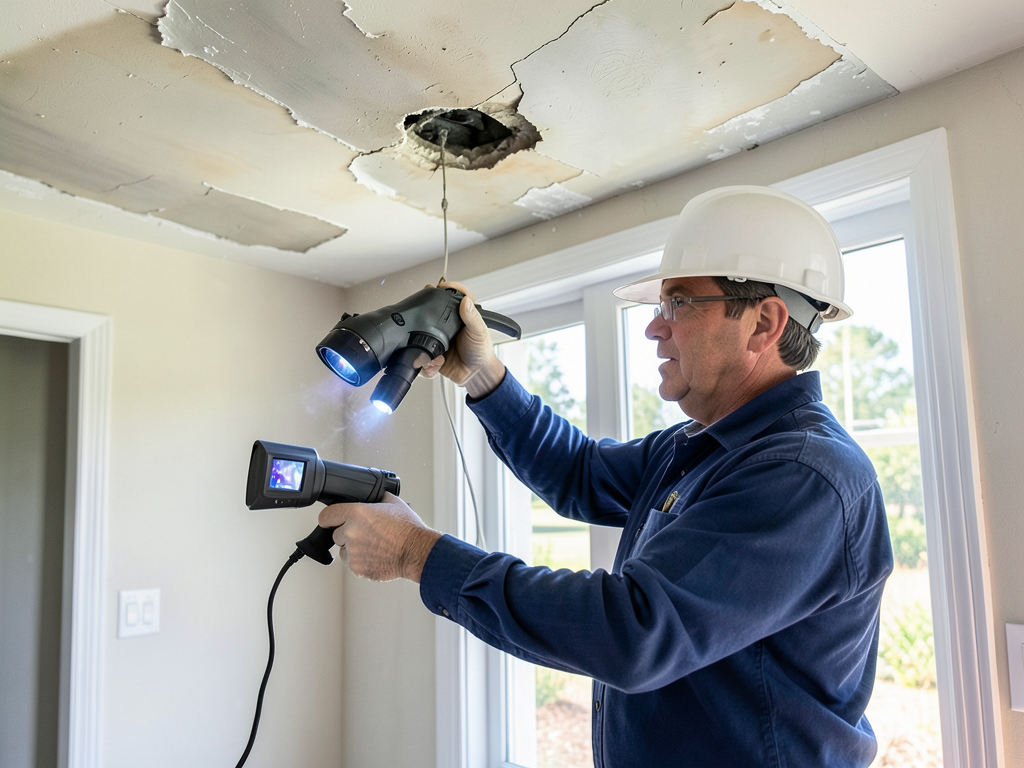
Thermal imaging cameras detect temperature differences caused by moisture presence. Wet materials conduct heat differently than dry materials, creating visible patterns on infrared scans. A trained technician can identify the exact perimeter of water damage, track moisture migration paths, and locate the source without removing drywall. This technology is particularly valuable for detecting HVAC condensate line failures where water travels along structural members before dripping onto ceilings.
Professional-grade moisture meters provide quantitative data about water content in various materials. Pin-type meters measure moisture at specific depths, while non-invasive meters scan larger areas without surface damage. These tools can distinguish between surface condensation and deep moisture penetration, helping determine if materials need removal or can be dried in place.
Acoustic leak detection equipment amplifies the sound of water movement through pipes. Even small leaks under pressure create distinctive sounds that sensitive microphones can detect through flooring and walls. This technology excels at finding slab leaks or pipe failures in walls where other methods might require destructive testing.
Smoke testing for plumbing systems introduces non-toxic smoke into drain lines to reveal cracks, loose connections, or failed seals. The smoke exits at leak points, creating visible confirmation of problems that might only show as stains. This method is particularly effective for identifying toilet flange leaks or cracked shower pans that cause ceiling stains below bathrooms.
Preventing future ceiling water damage
Once you’ve addressed the immediate problem, prevention becomes your best defense against repeat incidents. Several proactive measures can significantly reduce your risk of future ceiling water damage.
Regular HVAC maintenance prevents the most common cause of summer ceiling leaks. Schedule annual AC tune-ups that include condensate line cleaning and pan inspection. Many HVAC companies offer maintenance plans that include bi-annual visits timed before summer cooling season and after winter heating season. Clean condensate lines prevent the algae and debris buildup that causes overflows.
Roof inspections after major wind events catch damage before it causes interior problems. Santa Ana winds can loosen shingles, damage flashing, or drive debris into roof valleys where it traps water. A professional inspection after significant wind events costs far less than interior water damage repairs. Look for companies that use drones for safe, thorough roof assessments.
Plumbing system inspections for homes over 15 years old can identify failing components before catastrophic leaks occur. This includes checking supply line connections, drain line integrity, and water heater condition. Many restoration companies offer free plumbing inspections with water damage services, providing baseline information about your system’s condition.
Water alarm installation in high-risk areas provides early warning of developing problems. Place battery-powered water sensors near water heaters, under sinks, and in laundry rooms. These devices sound alarms when they contact water, giving you time to address problems before they cause ceiling damage. Smart water alarms can send alerts to your phone even when you’re away from home.
Upgrade vulnerable plumbing components based on your home’s age and materials. Replace rubber washing machine supply hoses with steel-braided versions. Install emergency shutoff valves that automatically cut water supply if they detect unusual flow patterns. These relatively inexpensive upgrades prevent many common causes of ceiling water damage.
Insurance considerations for ceiling water damage
Understanding how insurance companies categorize water damage helps you navigate the claims process more effectively. The distinction between covered and excluded damage often depends on the cause and timing of the incident.. Read more about Identifying the difference between dry rot and termite damage in your Riverside home.
Sudden and accidental damage typically receives coverage under standard homeowners policies. This includes burst pipes, failed water heaters, and storm damage that causes immediate water intrusion. The key factor is that the damage occurs suddenly without warning, allowing you to demonstrate that you took reasonable care of your property.
Gradual damage from maintenance issues often falls outside coverage. This category includes damage from long-term roof leaks where the homeowner should have noticed and addressed the problem, or plumbing corrosion that developed over years of neglect. Insurance companies argue that gradual damage represents a failure to maintain the property rather than an insurable event.
Flood damage requires separate coverage. Standard homeowners policies exclude damage from rising water, whether from heavy rains, broken dams, or sewer backups. Riverside County residents in flood-prone areas should consider separate flood insurance through the National Flood Insurance Program, especially if their property sits near the Santa Ana River or in low-lying areas.
Mold damage coverage varies significantly by policy and state regulations. California law requires insurers to cover mold remediation if it results from a covered water loss, but many policies limit mold coverage to specific dollar amounts or exclude it entirely for gradual moisture problems. Document the source and timing of water damage carefully to support your mold claim.
Documentation strengthens every claim. Take photos and videos of damage immediately, keep receipts for emergency repairs, and maintain communication records with contractors and insurance adjusters. Professional restoration companies often provide detailed documentation that insurance companies accept as evidence of damage extent and necessary repairs.
Immediate steps while waiting for professional help
If you’ve identified an active leak but help hasn’t arrived yet, several actions can minimize damage and protect your property. These steps focus on containment and safety rather than repair.
Contain the water spread by placing buckets, pans, or towels under active drips. For ceiling areas with visible bulging, create a small drainage hole using a screwdriver to release trapped water. This prevents ceiling collapse and directs water to a controlled collection point. Work slowly and wear safety glasses, as water may spray when the first hole penetrates.
Protect your belongings by moving furniture, electronics, and valuables away from affected areas. Water travels along the path of least resistance, often moving horizontally through ceiling materials before dripping down. Items several feet from visible stains may still be at risk if water migrates along joists or electrical conduits.
Improve air circulation to begin the drying process. Open windows if weather permits, run fans to increase evaporation, and use dehumidifiers if available. While professional drying equipment is more effective, these steps can reduce moisture levels and slow mold growth while you wait for help.
Document everything with photos and videos before beginning any cleanup. Capture the extent of damage, water paths, and affected items. This documentation helps with insurance claims and provides professionals with information about the damage progression when they arrive.
Avoid electrical hazards by staying out of rooms where water contacts outlets, switches, or fixtures. If safe to do so, turn off power to affected areas at the circuit breaker. Never touch electrical devices or attempt to unplug items in wet areas. Water conducts electricity and poses serious shock risks.
Frequently Asked Questions
How can I tell if my ceiling stain is from a new leak or an old one?
Active leaks create soft, damp areas that may drip when touched and often show darker coloration. Old stains appear dry, brittle, and may have yellowish or brownish discoloration from mineral deposits left as water evaporated. Active leaks also tend to spread or grow after rainfall or when plumbing fixtures above are used.
Can I just paint over a water stain on my ceiling?
No. Painting over a water stain without addressing the source will only temporarily hide the problem. Moisture trapped behind paint can cause bubbling, peeling, and continued damage. Additionally, if mold is present, painting seals it against the surface where it can continue growing and potentially cause health issues.
How quickly does mold grow after a ceiling leak?
In Riverside’s climate, mold can begin colonizing damp materials within 24-48 hours of water exposure. The combination of our summer humidity and indoor temperatures creates ideal conditions for rapid mold growth. This timeline underscores why immediate water removal and drying are critical after any ceiling leak.. Read more about Why using bleach on mold in your Riverside bathroom is actually a bad idea.
Should I call a roofer or plumber first for a ceiling stain?
Start by determining if the stain is active or old, and its location relative to plumbing fixtures. Stains below bathrooms or kitchens usually indicate plumbing issues, while those near exterior walls often suggest roof problems. If you can’t determine the source, a water damage restoration company can diagnose the problem and recommend the appropriate specialist.
How much does it cost to repair ceiling water damage?
Repair costs vary widely based on damage extent, from $500 for minor drywall replacement to $5,000+ for extensive structural repairs and mold remediation. The source of the leak also affects cost, as roof repairs typically cost more than plumbing fixes. Professional inspection provides accurate estimates after diagnosing the specific problem.
Don’t let ceiling water damage threaten your home’s safety
A dark spot on your ceiling is more than an aesthetic problem. It’s a warning sign that water is compromising your home’s structural integrity and potentially creating health hazards. In Riverside’s climate, where seasonal storms and summer heat create year-round risks, understanding the difference between active and old leaks can save you thousands in repair costs and protect your family from mold exposure.
The diagnostic steps outlined here help you make informed decisions about whether you’re facing an emergency requiring immediate professional intervention or an older issue that still needs addressing but allows more time for planning. Remember that water damage rarely stays contained to visible areas. What you see on your ceiling may represent only a fraction of the moisture affecting your home. Emergency flood cleanup and restoration in Jurupa Valley.
Professional water damage restoration goes beyond simple leak repair. It includes moisture mapping to identify hidden damage, structural drying to prevent secondary issues, and mold prevention protocols that protect your indoor air quality. When you’re dealing with ceiling water damage in Riverside, you need local expertise that understands our specific climate challenges and building patterns.
If you’re seeing active dripping, large sagging areas, or water near electrical fixtures, don’t wait. The longer water continues to enter your home, the more extensive and expensive the damage becomes. Call (951) 309-5499 today to schedule your inspection. Our certified technicians use thermal imaging and moisture meters to diagnose problems accurately and provide detailed action plans for complete restoration.
Whether you need emergency response for an active leak or professional assessment of an older stain, we’re ready to help. Our team understands Riverside’s unique challenges and provides the rapid, professional service that protects your home and your family’s health. Don’t let uncertainty about that ceiling stain cost you more in the long run. Call (951) 309-5499 now and take the first step toward a dry, safe home. For more information, visit IICRC S500 standards.
You may also find this helpful. Why your AC condensate line is the biggest threat to your ceiling this summer.
{
“@context”: “https://schema.org”,
“@type”: “BlogPosting”,
“headline”: “How to tell if that dark spot on your ceiling is an active roof leak or an old plumbing issue”,
“description”: “Discover how to identify the source of ceiling water damage in Riverside homes. Learn to distinguish between roof leaks, plumbing issues, and HVAC problems before mold spreads.”,
“wordCount”: 3496,
“datePublished”: “2026-05-18T08:28:00.000Z”,
“dateModified”: “2026-05-18T08:28:00.000Z”,
“inLanguage”: “en-US”,
“mainEntityOfPage”: {
“@type”: “WebPage”,
“@id”: “https://libertywaterdamagerestorationriverside.com”
},
“publisher”: {
“@type”: “LocalBusiness”,
“name”: “Liberty Water Damage Restoration Riverside”,
“url”: “https://libertywaterdamagerestorationriverside.com”
},
“author”: {
“@type”: “Organization”,
“name”: “Liberty Water Damage Restoration Riverside”,
“url”: “https://libertywaterdamagerestorationriverside.com”
},
“image”: {
“@type”: “ImageObject”,
“url”: “https://libertywaterdamagerestorationriverside.com/wp-content/uploads/2026/03/how-to-tell-if-that-dark-spot-on-your-ceiling-is-a-1.png”
}
}
{
“@context”: “https://schema.org”,
“@type”: “LocalBusiness”,
“name”: “Liberty Water Damage Restoration Riverside”,
“url”: “https://libertywaterdamagerestorationriverside.com”,
“address”: {
“@type”: “PostalAddress”,
“addressLocality”: “Riverside”
},
“areaServed”: {
“@type”: “City”,
“name”: “Riverside”
}
}
{
“@context”: “https://schema.org”,
“@type”: “FAQPage”,
“mainEntity”: [
{
“@type”: “Question”,
“name”: “How can I tell if my ceiling stain is from a new leak or an old one?”,
“acceptedAnswer”: {
“@type”: “Answer”,
“text”: “Active leaks create soft, damp areas that may drip when touched and often show darker coloration. Old stains appear dry, brittle, and may have yellowish or brownish discoloration from mineral deposits left as water evaporated. Active leaks also tend to spread or grow after rainfall or when plumbing fixtures above are used.”
}
},
{
“@type”: “Question”,
“name”: “Can I just paint over a water stain on my ceiling?”,
“acceptedAnswer”: {
“@type”: “Answer”,
“text”: “No. Painting over a water stain without addressing the source will only temporarily hide the problem. Moisture trapped behind paint can cause bubbling, peeling, and continued damage. Additionally, if mold is present, painting seals it against the surface where it can continue growing and potentially cause health issues.”
}
},
{
“@type”: “Question”,
“name”: “How quickly does mold grow after a ceiling leak?”,
“acceptedAnswer”: {
“@type”: “Answer”,
“text”: “In Riverside’s climate, mold can begin colonizing damp materials within 24-48 hours of water exposure. The combination of our summer humidity and indoor temperatures creates ideal conditions for rapid mold growth. This timeline underscores why immediate water removal and drying are critical after any ceiling leak.”
}
},
{
“@type”: “Question”,
“name”: “Should I call a roofer or plumber first for a ceiling stain?”,
“acceptedAnswer”: {
“@type”: “Answer”,
“text”: “Start by determining if the stain is active or old, and its location relative to plumbing fixtures. Stains below bathrooms or kitchens usually indicate plumbing issues, while those near exterior walls often suggest roof problems. If you can’t determine the source, a water damage restoration company can diagnose the problem and recommend the appropriate specialist.”
}
},
{
“@type”: “Question”,
“name”: “How much does it cost to repair ceiling water damage?”,
“acceptedAnswer”: {
“@type”: “Answer”,
“text”: “Repair costs vary widely based on damage extent, from $500 for minor drywall replacement to $5,000+ for extensive structural repairs and mold remediation. The source of the leak also affects cost, as roof repairs typically cost more than plumbing fixes. Professional inspection provides accurate estimates after diagnosing the specific problem.”
}
}
]
}
{
“@context”: “https://schema.org”,
“@type”: “BreadcrumbList”,
“itemListElement”: [
{
“@type”: “ListItem”,
“position”: 1,
“name”: “Home”,
“item”: “https://libertywaterdamagerestorationriverside.com”
},
{
“@type”: “ListItem”,
“position”: 2,
“name”: “Blog”,
“item”: “https://libertywaterdamagerestorationriverside.com/blog”
},
{
“@type”: “ListItem”,
“position”: 3,
“name”: “How to tell if that dark spot on your ceiling is an active roof leak or an old plumbing issue”
}
]
}
{
“@context”: “https://schema.org”,
“@type”: “Service”,
“serviceType”: “Water Damage Restoration”,
“provider”: {
“@type”: “LocalBusiness”,
“name”: “Liberty Water Damage Restoration Riverside”,
“url”: “https://libertywaterdamagerestorationriverside.com”
},
“areaServed”: {
“@type”: “City”,
“name”: “Riverside”
},
“description”: “Discover how to identify the source of ceiling water damage in Riverside homes. Learn to distinguish between roof leaks, plumbing issues, and HVAC problems before mold spreads.”
}