
Protecting your Hunter Industrial Park warehouse from roof leak damage
Your Hunter Industrial Park warehouse faces constant threat from roof leaks that can destroy inventory equipment and halt operations. When water penetrates your roof membrane it travels along structural members finding hidden pathways into critical areas. A small leak today becomes a major structural failure tomorrow if left untreated. Top-rated water damage repair and restoration in Corona.
Commercial roof leaks in Riverside industrial parks typically start from UV degradation of TPO or EPDM membranes combined with thermal expansion from our extreme summer heat. The Santa Ana winds create uplift pressure that separates seams while winter rains exploit these weaknesses. Your warehouse roof needs more than a quick patch when water damage occurs. EPA Cool Roof Information.
Professional restoration addresses both the exterior leak source and the interior water damage. Thermal imaging detects moisture trapped in insulation layers while industrial dehumidifiers prevent mold growth in stored materials. The restoration process must consider your business continuity scheduling repairs during off hours to minimize downtime. Riverside water restoration teams that can be at your door in an hour.
Call (951) 309-5499 today to schedule your inspection before the next storm hits. Our emergency response teams are standing by to protect your Hunter Industrial Park investment. Emergency flood cleanup and restoration in Jurupa Valley.
Emergency response for Hunter Industrial Park warehouses
When a roof leak emergency strikes your Hunter Industrial Park warehouse every minute counts. Water flows downhill finding the path of least resistance through ceiling grids electrical conduits and HVAC systems. Quick action prevents catastrophic inventory damage and equipment loss.
Our emergency tarping service deploys within 60 minutes of your call. We use 20-mil reinforced polyethylene tarps secured with batten bars and termination bars creating a watertight barrier. This immediate protection buys time for proper assessment while keeping your operations running.. Read more about Keeping your gutters clear to prevent roof leaks in the Woodcrest area.
Commercial warehouses require specialized equipment. We bring industrial-grade dehumidifiers capable of removing 200+ pints of moisture per day. High-volume air movers create circulation patterns that dry materials from the inside out preventing hidden mold growth in wall cavities and under flooring.
The first 24 hours determine restoration success. Category 1 clean water becomes Category 2 gray water within 48 hours as bacteria multiply. After 72 hours it becomes Category 3 black water requiring complete material removal. Time is your enemy in water damage situations.
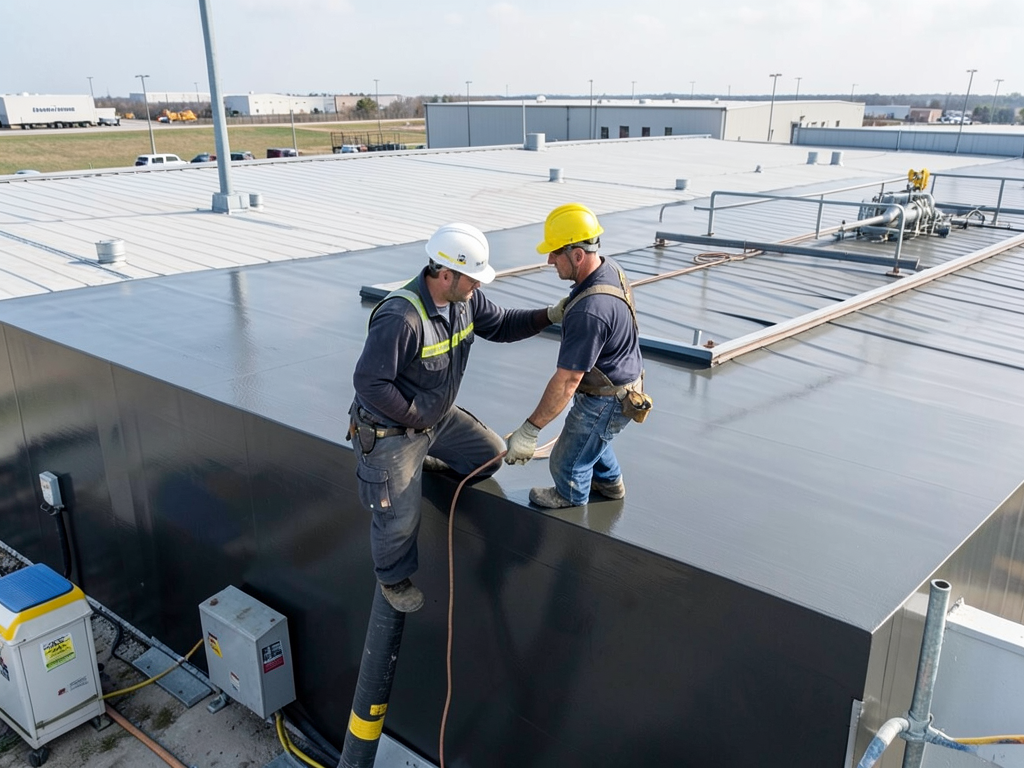
Thermal imaging and moisture detection for commercial roofs
Hidden moisture in commercial roof systems causes more damage than visible leaks. Water trapped in insulation reduces R-value increases cooling costs and creates perfect mold growth conditions. Thermal imaging reveals what the naked eye cannot see.
Our FLIR thermal cameras detect temperature differentials as small as 0.1 degrees Fahrenheit. Wet insulation holds heat longer than dry material creating thermal signatures visible during both day and night scans. This technology maps the full extent of water intrusion without destructive testing.
We use penetrating moisture meters with extended probes to test insulation depth up to 6 inches. Non-penetrating meters scan large areas quickly identifying moisture patterns. Combined these tools create a complete moisture map showing exactly where restoration is needed.
Commercial roof assemblies in Hunter Industrial Park often contain multiple layers. Built-up roofing systems may have 3-4 layers of felt and asphalt. Each layer must be tested individually as water travels horizontally between layers before showing inside.
Moisture mapping guides restoration decisions. Areas with less than 15% moisture content may dry in place. Between 15-25% requires targeted drying. Over 25% needs complete removal and replacement. This data-driven approach prevents unnecessary demolition while ensuring complete restoration.
Restoration vs replacement cost analysis
Full roof replacement costs $8-15 per square foot while restoration systems cost $3-6 per square foot. For a 50000 square foot warehouse that represents a $250000 difference in project cost. Restoration becomes the logical choice when the roof structure remains sound.
Roof restoration systems include elastomeric coatings liquid-applied membranes and reinforced fabric systems. These create a new waterproof barrier over existing roofing extending service life 10-15 years. The process involves cleaning repairs and coating application typically completed in 3-5 days versus 3-4 weeks for replacement.
California Title 24 energy standards favor restoration. Cool roof coatings reflect 70-85% of solar radiation reducing cooling costs 15-30%. Many restoration systems qualify for Energy Star certification meeting California’s Title 24 requirements without expensive insulation replacement. California Title 24 Energy Standards.
Business interruption costs often exceed restoration expenses. A 50000 square foot warehouse averaging $50 per square foot in stored goods represents $2.5 million in inventory. One week of water damage restoration costs far less than one day of inventory loss from a full replacement shutdown.
Restoration preserves your building’s envelope integrity. Modern warehouses use lightweight steel framing that cannot support additional dead load from new roofing materials. Restoration adds minimal weight while providing superior waterproofing protection.
Specialized systems for Hunter Industrial Park roofs
TPO roofing dominates Hunter Industrial Park due to its heat reflectivity and energy efficiency. These single-ply membranes typically last 20-25 years but fail at seams and flashings. Restoration involves cleaning seam areas applying reinforcement fabric and coating the entire surface with elastomeric material.
EPDM rubber roofs installed before 2010 often use seam adhesives that fail under UV exposure. These roofs develop splits at expansion joints and around rooftop equipment. Restoration requires seam repair fabric application followed by coating with reflective finish extending service life 12-15 years.
Metal roofing on older industrial buildings develops rust around fasteners and at panel overlaps. Restoration involves rust treatment primer application and coating with high-solids elastomeric material. This process prevents further corrosion while improving thermal performance.
Built-up roofing (BUR) systems with gravel surfacing hide early deterioration signs. Restoration requires gravel removal seam repair and application of reinforced coating system. The process restores waterproofing while improving energy efficiency through reflective top coats.
Each roofing type requires specific restoration chemistry. TPO needs solvent-based cleaners EPDM requires pH-neutral products. Using incorrect materials guarantees failure. Our technicians understand these material science requirements ensuring restoration success.
Interior structural drying for commercial spaces
Roof leaks create cascading water damage through commercial buildings. Water travels along purlins drips through ceiling grids and saturates inventory stored below. Professional drying requires understanding building science and material properties.
Industrial dehumidification removes moisture from air preventing secondary damage. Desiccant dehumidifiers work in cold conditions while refrigerant units excel in warm environments. Hunter Industrial Park warehouses often need both types due to varying temperatures throughout the facility.
Air movement creates evaporation. High-velocity air movers placed strategically create circulation patterns that pull moisture from materials into the air stream. The dehumidifiers then capture this moisture preventing condensation on cooler surfaces.
Material-specific drying prevents damage. Gypsum drywall absorbs moisture along its paper facing but dries from the back side. Plywood swells when wet but returns to shape when properly dried. Understanding these properties guides drying strategy and equipment placement.
Mold prevention requires humidity control. Indoor relative humidity must stay below 60% to prevent mold growth. Our monitoring equipment tracks moisture content in materials and air ensuring complete drying without over-drying which can cause material damage.
California building standards and permit requirements
California Building Code Title 24 Section 1505 requires cool roof compliance for commercial buildings. Roof restoration systems must meet minimum solar reflectance and thermal emittance standards. Many elastomeric coatings qualify as cool roofs reducing cooling loads and meeting energy code requirements.
Riverside County requires permits for roof repairs exceeding 100 square feet or involving structural changes. The permit process includes engineering calculations showing the roof can support any additional weight from restoration materials. Most restoration systems add less than 1 pound per square foot meeting structural requirements. What to do when a pipe bursts in your Riverside home.
SCAQMD Rule 1168 regulates volatile organic compound emissions from roofing adhesives and coatings. All restoration materials must meet South Coast Air Quality Management District VOC limits. Our products comply with these regulations ensuring legal and environmentally responsible restoration.
California Code of Regulations Title 24 Part 6 Energy Standards require minimum insulation R-values. Roof restoration must maintain or improve existing insulation performance. Thermal imaging during the assessment process identifies areas where insulation replacement might be necessary for code compliance.
Permit fees in Riverside County vary by project scope but typically range $500-2000 for commercial roof work. The approval process takes 2-4 weeks depending on plan review requirements. Starting work without permits risks stop-work orders and double permit fees. Getting your Riverside water damage insurance claim approved.
Insurance claim coordination for commercial properties
Commercial insurance policies treat roof leaks differently than residential coverage. Many policies exclude wear and tear or require specific maintenance documentation. Understanding your policy coverage before damage occurs prevents claim denial.
Xactimate software creates professional damage estimates insurance adjusters recognize. Our detailed documentation includes thermal imaging reports moisture mapping and material takeoffs. This comprehensive approach supports maximum claim approval while preventing disputes over scope and pricing.
Business interruption insurance covers lost revenue during restoration. Documentation of revenue loss patterns helps justify claim amounts. We work with your insurance team to minimize downtime while maximizing coverage for both restoration and business losses.
Public adjusters represent your interests in complex commercial claims. They understand policy language and can negotiate better settlements than property owners handling claims alone. We can recommend qualified public adjusters familiar with commercial roof restoration claims.
Time limits affect claim filing. Most policies require notice within 30-60 days of discovering damage. Prompt professional assessment ensures you meet these deadlines while preserving evidence of the damage extent and cause.
Preventative maintenance programs
Regular roof inspections prevent emergency leaks. Biannual inspections catch seam separation flashing deterioration and membrane wear before water intrusion occurs. This proactive approach costs $500-1500 annually versus $10000-50000 for emergency restoration.
Hunter Industrial Park warehouses benefit from seasonal maintenance schedules. Spring inspections prepare for summer heat stress while fall assessments ready roofs for winter rains. This timing addresses seasonal failure patterns specific to Riverside’s climate.
Drainage system maintenance prevents ponding water. Clogged scuppers and downspouts create standing water that accelerates membrane deterioration. Regular cleaning ensures proper water flow protecting your roof investment.
Roof coating maintenance extends restoration system life. Most elastomeric coatings require reapplication every 5-7 years. This maintenance costs 30-40% of original restoration price while preserving the waterproofing barrier.
Documentation proves maintenance compliance. Insurance companies often deny claims for lack of maintenance. Our inspection reports with photos and recommendations create the paper trail supporting your coverage when emergencies occur.
Local climate impact on roof performance
Riverside’s climate creates unique roof stress patterns. Summer temperatures exceeding 110 degrees Fahrenheit cause thermal expansion of roofing materials. TPO and EPDM membranes expand and contract daily creating stress at seams and flashings.
Santa Ana winds reaching 60+ mph create uplift pressure on roof systems. These winds enter building perimeters creating negative pressure that pulls roofing materials upward. Proper edge termination and securement prevent wind damage.
Monsoon season humidity spikes create condensation problems. Warm moist air contacts cool roof surfaces creating water droplets that mimic leaks. Proper ventilation prevents this condensation while reducing cooling costs.
UV radiation degrades roofing materials faster than temperature alone. Southern California receives 300+ days of sunlight annually accelerating material breakdown. Reflective coatings protect underlying membranes while reducing heat gain.
Thermal cycling causes material fatigue. Daily temperature swings of 30-40 degrees create expansion-contraction cycles that weaken adhesives and fasteners. Understanding these patterns guides restoration material selection and application timing.
Case studies from Hunter Industrial Park
Warehouse A experienced chronic leaks at expansion joints. Thermal imaging revealed moisture trapped in 40% of the roof area. Restoration involved seam repair reinforcement fabric application and coating with 85% reflective elastomeric material. The project cost $45000 versus $180000 for replacement while maintaining operations throughout.
Distribution center B had failed TPO seams causing inventory damage. Emergency tarping stopped active leaks while restoration planning proceeded. The 6000 square foot repair area received seam reinforcement coating and drainage upgrades. Business interruption lasted 4 days versus 3 weeks for replacement.
Manufacturing facility C showed widespread moisture in built-up roofing. Core samples revealed rotted wood decking in 15% of the area. Restoration required selective deck replacement seam repair and complete coating. The targeted approach saved $75000 while addressing the actual problems.
Office warehouse D needed cool roof compliance upgrade. The 25000 square foot TPO roof received high-reflectivity coating meeting Title 24 standards. Energy monitoring showed 22% reduction in cooling costs while extending roof life 12+ years.
These examples demonstrate restoration’s versatility. Each project addressed specific problems with targeted solutions minimizing cost while maximizing performance.
Emergency tarping and stabilization techniques
Emergency tarping requires understanding wind loads and water flow. Tarps must slope toward drainage points preventing water pooling that creates additional roof stress. Proper anchoring prevents wind uplift that tears tarps and damages roofing materials.
We use 20-mil reinforced polyethylene tarps with UV inhibitors lasting 12-18 months. These outlast standard 6-mil tarps while providing superior tear resistance. The material weight requires proper fastening techniques preventing wind damage.
Batten bar systems secure tarps without penetrating roof membranes. These aluminum extrusions clamp tarp edges while distributing wind loads across multiple fasteners. The system prevents the tear points that occur with simple nail fastening.
Termination bars create clean edges at parapet walls and roof edges. These aluminum pieces provide positive attachment while preventing wind from getting under tarp edges. Proper detailing at these critical areas ensures tarp survival during wind events.
Tarp installation timing affects effectiveness. Daytime installation allows proper drainage slope assessment while nighttime work requires temporary lighting. Weather forecasts guide installation scheduling ensuring tarps survive approaching storms.
Commercial roof coating systems
Acrylic elastomeric coatings provide cost-effective restoration for smooth-surfaced roofs. These water-based products cure to form flexible membranes bridging minor cracks and seams. Application requires 50+ degree temperatures and dry conditions making spring and fall ideal application seasons.
Silicone coatings excel in ponding water situations. These moisture-cure products form chemical bonds with substrates while resisting UV degradation. Silicone costs 30-40% more than acrylic but lasts 15-20 years versus 8-10 years for acrylic systems.
Polyurethane coatings provide superior chemical and abrasion resistance. These two-component systems create hard durable surfaces ideal for roofs with HVAC equipment traffic. The chemical cure requires precise mixing and temperature control during application.
Aluminum roof coatings reflect 70-80% of solar radiation while providing rust inhibition for metal roofs. These bituminous-based products contain aluminum flakes creating the classic silver roof appearance. They work best over smooth-surfaced metal roofing.
Coating selection depends on roof condition climate and budget. Our assessment process evaluates these factors recommending systems that provide optimal performance for your specific situation.
Energy efficiency and cool roof benefits
Cool roof restoration reduces energy consumption through solar reflectance and thermal emittance. High-reflectivity coatings can lower roof surface temperatures by 50-60 degrees Fahrenheit reducing heat transfer into buildings. This temperature reduction directly impacts cooling costs.
California Title 24 mandates cool roof compliance for commercial buildings with low-slope roofs. Restoration systems meeting these standards must achieve minimum solar reflectance of 0.70 and thermal emittance of 0.75. Many modern coatings exceed these requirements achieving 0.80+ reflectance.
Energy savings calculations justify restoration investment. A 50000 square foot warehouse with 15% cooling load reduction saves approximately $12000 annually at $0.15 per kWh. Over a 10-year restoration life this equals $120000 in energy savings offsetting restoration costs.
Urban heat island effects impact surrounding areas. Cool roofs reduce ambient temperatures in industrial parks improving worker comfort and reducing overall cooling loads for neighboring buildings. This community benefit supports local sustainability initiatives.
Utility rebates incentivize cool roof installation. Southern California Edison and Southern California Gas offer rebates for energy-efficient roof improvements. These programs can reduce restoration costs by 10-20% while improving building performance.
Structural considerations for warehouse roofs
Commercial warehouse roofs must support equipment loads snow loads and maintenance personnel. Modern lightweight steel framing has limited load capacity compared to older heavy timber construction. Restoration materials must add minimal weight while providing maximum protection.
Roof decking type affects restoration approach. Concrete decks require different fastening systems than metal decking or wood sheathing. Understanding these differences ensures proper attachment of restoration materials preventing system failure.
Expansion joints accommodate building movement. These joints require special treatment during restoration preventing coating failure along movement lines. Proper detailing at these locations ensures long-term system performance.
Roof-mounted equipment creates waterproofing challenges. HVAC units exhaust fans and skylights require careful detailing during restoration. Flashing integration prevents leaks while maintaining equipment functionality.
Parapet walls and roof edges experience different stress patterns than field areas. These perimeter zones require enhanced reinforcement preventing wind uplift and water infiltration. Proper detailing at these critical locations ensures complete protection.
Quality control and warranty considerations
Professional restoration requires quality control throughout the process. Surface preparation determines coating adhesion. Moisture testing before application prevents coating failure. Temperature and humidity monitoring ensures proper curing conditions.
Warranty terms vary by manufacturer and application method. System warranties typically cover 10-20 years while workmanship warranties cover 1-5 years. Understanding these differences helps select appropriate protection levels.
Manufacturer certification ensures proper application. Many coating systems require trained applicators following specific procedures. This certification protects both the building owner and the contractor while ensuring warranty coverage.
Inspection requirements maintain warranty coverage. Many manufacturers require annual inspections documenting roof condition. These inspections catch problems early while maintaining warranty validity.
Documentation proves compliance with warranty requirements. Detailed records of surface preparation coating application and inspection findings support warranty claims if problems develop. This documentation protects your investment throughout the warranty period.
Environmental considerations and sustainability
Roof restoration reduces landfill waste compared to replacement. Restoration keeps existing roofing materials in place preventing 1-3 tons of waste per 1000 square feet from entering landfills. This waste reduction supports corporate sustainability goals.
Low-VOC coating systems minimize environmental impact. Modern water-based coatings contain fewer harmful chemicals than traditional solvent-based products. These environmentally friendly materials protect both workers and building occupants during application.
Energy efficiency reduces carbon footprint. Cool roof restoration decreases electricity consumption for cooling reducing power plant emissions. This reduction supports corporate environmental responsibility initiatives while lowering operating costs.
Material recycling opportunities exist for removed roofing components. Metal flashings and equipment can be recycled while old insulation may find reuse applications. These recycling efforts further reduce environmental impact.
Sustainable practices attract environmentally conscious tenants. Buildings with documented energy efficiency and environmental responsibility command premium rents while reducing vacancy rates. Restoration supports these market advantages.
Choosing the right restoration contractor
Commercial roof restoration requires specialized expertise. Look for contractors with specific experience in your roof type and building use. References from similar projects provide performance history and reliability information.
Insurance coverage protects your investment. Contractors must carry general liability workers’ compensation and excess liability insurance. Certificate verification ensures coverage remains active throughout the project.
Financial stability indicates contractor reliability. Companies with established credit references and bonding capacity complete projects as promised. Financial weakness often results in abandoned work and legal complications.
Communication quality reflects project management ability. Contractors who provide detailed written proposals respond promptly to questions and maintain regular progress updates demonstrate professionalism that extends to field performance.
Local presence ensures availability for warranty service. Contractors based in Riverside understand local conditions and remain available for maintenance and repairs. This proximity proves valuable when warranty service becomes necessary.
Call to action
Don’t wait for water damage to destroy your Hunter Industrial Park warehouse investment. Professional assessment identifies problems early while restoration options provide cost-effective solutions. Our emergency response teams stand ready to protect your property 24/7.
Call (951) 309-5499 today to schedule your inspection. Early detection prevents emergency repairs while restoration planning minimizes business interruption. Our thermal imaging moisture mapping and restoration expertise protect your warehouse from roof leak damage.
Pick up the phone and call (951) 309-5499 before the next storm hits. Your Hunter Industrial Park warehouse deserves professional protection from water damage. We combine emergency response with restoration expertise ensuring complete protection for your commercial property.
Frequently Asked Questions
How much does commercial roof restoration cost in Riverside?
Commercial roof restoration costs $3-6 per square foot depending on roof type coating system and surface preparation requirements. A 50000 square foot warehouse typically costs $150000-300000 for complete restoration versus $400000-750000 for replacement.
How long does commercial roof restoration take?
Most commercial roof restoration projects complete in 3-5 days for average-sized buildings. Large warehouses may require 1-2 weeks depending on roof area coating system and weather conditions. Emergency tarping provides immediate protection while restoration proceeds.
Will restoration affect my warehouse operations?
Professional restoration minimizes business interruption through careful scheduling and containment procedures. Work typically proceeds in sections allowing continued operations in unaffected areas. Emergency tarping provides immediate protection enabling restoration during off hours or weekends.
What warranties come with commercial roof restoration?
Restoration systems typically include 10-20 year manufacturer warranties covering material performance and 1-5 year workmanship warranties covering installation quality. Warranty terms vary by coating system surface preparation and contractor certification requirements.
How do I know if my roof needs restoration vs replacement?
Professional assessment using thermal imaging moisture meters and core samples determines roof condition. Restoration works when the roof structure remains sound and moisture content stays below 25%. Replacement becomes necessary for widespread structural damage or excessive moisture content.
Does roof restoration qualify for energy rebates?
Many restoration systems meeting cool roof standards qualify for utility rebates through Southern California Edison and Southern California Gas. These rebates typically cover 10-20% of restoration costs while providing ongoing energy savings through improved building performance.
You may also find this helpful. Why you should check your window seals before the next Riverside windstorm.
{
“@context”: “https://schema.org”,
“@type”: “BlogPosting”,
“headline”: “Protecting your Hunter Industrial Park warehouse from roof leak damage”,
“description”: “Prevent costly roof leak damage at your Hunter Industrial Park warehouse. Learn emergency response, thermal imaging, and restoration vs replacement strategies.”,
“wordCount”: 3561,
“datePublished”: “2026-03-24T11:30:00.000Z”,
“dateModified”: “2026-03-24T11:30:00.000Z”,
“inLanguage”: “en-US”,
“mainEntityOfPage”: {
“@type”: “WebPage”,
“@id”: “https://libertywaterdamagerestorationriverside.com”
},
“publisher”: {
“@type”: “LocalBusiness”,
“name”: “Liberty Water Damage Restoration Riverside”,
“url”: “https://libertywaterdamagerestorationriverside.com”
},
“author”: {
“@type”: “Organization”,
“name”: “Liberty Water Damage Restoration Riverside”,
“url”: “https://libertywaterdamagerestorationriverside.com”
},
“image”: {
“@type”: “ImageObject”,
“url”: “https://libertywaterdamagerestorationriverside.com/wp-content/uploads/2026/03/protecting-your-hunter-industrial-park-warehouse-f-1.png”
}
}
{
“@context”: “https://schema.org”,
“@type”: “LocalBusiness”,
“name”: “Liberty Water Damage Restoration Riverside”,
“url”: “https://libertywaterdamagerestorationriverside.com”,
“address”: {
“@type”: “PostalAddress”,
“addressLocality”: “Riverside”
},
“areaServed”: {
“@type”: “City”,
“name”: “Riverside”
}
}
{
“@context”: “https://schema.org”,
“@type”: “FAQPage”,
“mainEntity”: [
{
“@type”: “Question”,
“name”: “How much does commercial roof restoration cost in Riverside?”,
“acceptedAnswer”: {
“@type”: “Answer”,
“text”: “Commercial roof restoration costs $3-6 per square foot depending on roof type coating system and surface preparation requirements. A 50000 square foot warehouse typically costs $150000-300000 for complete restoration versus $400000-750000 for replacement.”
}
},
{
“@type”: “Question”,
“name”: “How long does commercial roof restoration take?”,
“acceptedAnswer”: {
“@type”: “Answer”,
“text”: “Most commercial roof restoration projects complete in 3-5 days for average-sized buildings. Large warehouses may require 1-2 weeks depending on roof area coating system and weather conditions. Emergency tarping provides immediate protection while restoration proceeds.”
}
},
{
“@type”: “Question”,
“name”: “Will restoration affect my warehouse operations?”,
“acceptedAnswer”: {
“@type”: “Answer”,
“text”: “Professional restoration minimizes business interruption through careful scheduling and containment procedures. Work typically proceeds in sections allowing continued operations in unaffected areas. Emergency tarping provides immediate protection enabling restoration during off hours or weekends.”
}
},
{
“@type”: “Question”,
“name”: “What warranties come with commercial roof restoration?”,
“acceptedAnswer”: {
“@type”: “Answer”,
“text”: “Restoration systems typically include 10-20 year manufacturer warranties covering material performance and 1-5 year workmanship warranties covering installation quality. Warranty terms vary by coating system surface preparation and contractor certification requirements.”
}
},
{
“@type”: “Question”,
“name”: “How do I know if my roof needs restoration vs replacement?”,
“acceptedAnswer”: {
“@type”: “Answer”,
“text”: “Professional assessment using thermal imaging moisture meters and core samples determines roof condition. Restoration works when the roof structure remains sound and moisture content stays below 25%. Replacement becomes necessary for widespread structural damage or excessive moisture content.”
}
},
{
“@type”: “Question”,
“name”: “Does roof restoration qualify for energy rebates?”,
“acceptedAnswer”: {
“@type”: “Answer”,
“text”: “Many restoration systems meeting cool roof standards qualify for utility rebates through Southern California Edison and Southern California Gas. These rebates typically cover 10-20% of restoration costs while providing ongoing energy savings through improved building performance.”
}
}
]
}
{
“@context”: “https://schema.org”,
“@type”: “BreadcrumbList”,
“itemListElement”: [
{
“@type”: “ListItem”,
“position”: 1,
“name”: “Home”,
“item”: “https://libertywaterdamagerestorationriverside.com”
},
{
“@type”: “ListItem”,
“position”: 2,
“name”: “Blog”,
“item”: “https://libertywaterdamagerestorationriverside.com/blog”
},
{
“@type”: “ListItem”,
“position”: 3,
“name”: “Protecting your Hunter Industrial Park warehouse from roof leak damage”
}
]
}
{
“@context”: “https://schema.org”,
“@type”: “Service”,
“serviceType”: “Water Damage Restoration”,
“provider”: {
“@type”: “LocalBusiness”,
“name”: “Liberty Water Damage Restoration Riverside”,
“url”: “https://libertywaterdamagerestorationriverside.com”
},
“areaServed”: {
“@type”: “City”,
“name”: “Riverside”
},
“description”: “Prevent costly roof leak damage at your Hunter Industrial Park warehouse. Learn emergency response, thermal imaging, and restoration vs replacement strategies.”
}