
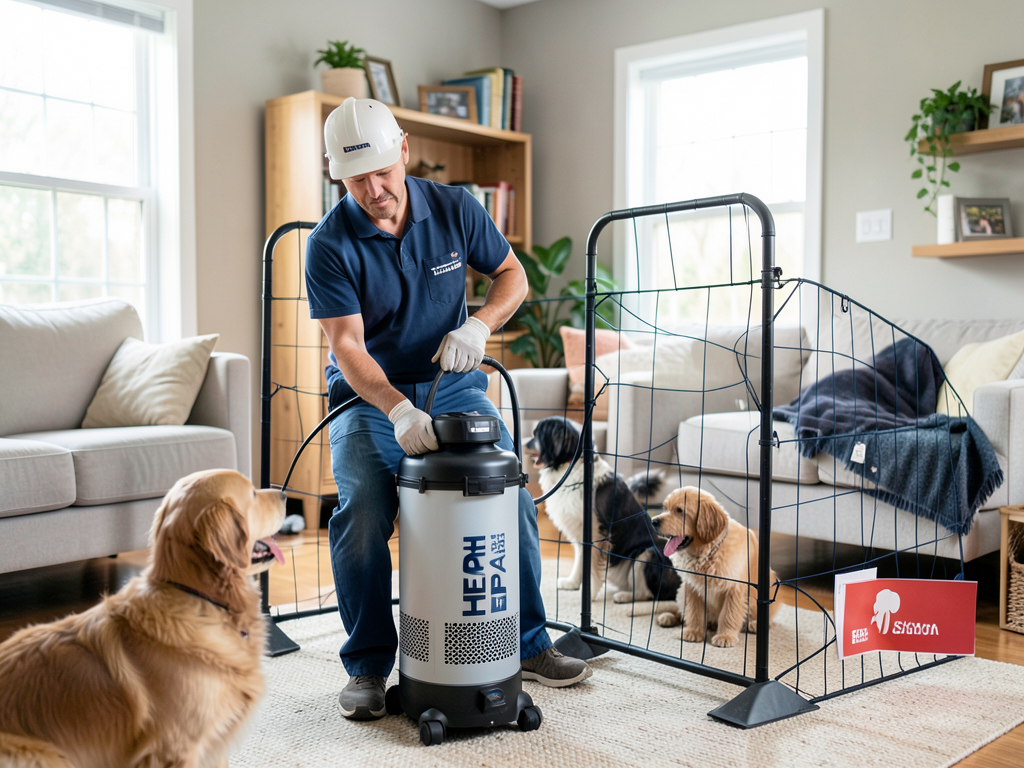
Keeping Your Pets Safe During Water Damage Restoration in Riverside
Water damage restoration creates an environment that can be frightening and dangerous for pets. The loud industrial fans, chemical treatments, and unfamiliar workers can cause significant stress for your animals. This guide provides practical steps to keep your pets safe and comfortable during the restoration process, with specific resources for Riverside pet owners. What to do when a pipe bursts in your Riverside home.
Common Hazards for Pets During Water Damage Recovery
Restoration work introduces several risks that pet owners often overlook. Understanding these dangers helps you create a comprehensive safety plan for your animals.
Chemical Exposure: Antimicrobials and VOCs
Professional restoration companies use antimicrobial treatments to prevent mold growth and sanitize affected areas. These products contain active ingredients like quaternary ammonium compounds and hydrogen peroxide that can cause respiratory irritation or skin reactions in pets. Many standard cleaning agents also release volatile organic compounds (VOCs) that pets breathe at much closer range than humans due to their smaller lung capacity.
According to the IICRC S500 Standard for Professional Water Damage Restoration, technicians must document chemical usage and provide safety data sheets to property owners. This documentation helps you understand what substances your pets might encounter. IICRC S500 Standard for Professional Water Damage Restoration.
Air Quality: Dust, Mold Spores, and Debris
Water damage often disturbs existing mold colonies, releasing spores into the air. HEPA air scrubbers capture particles as small as 0.3 microns, but pets with their closer proximity to floors and carpets face higher exposure levels. Restoration work also generates construction dust from demolition activities, creating additional respiratory hazards. EPA Indoor Air Quality Guidelines.
Category 3 water damage from sewage backups or floodwater introduces pathogens like E. coli and Salmonella that can survive on surfaces for weeks. Pets exploring affected areas risk ingesting these harmful organisms through grooming or direct contact. Top-rated water damage repair and restoration in Corona.
Structural Risks: Exposed Wiring and Weakened Floorboards
Water-damaged structures present physical hazards that pets may not recognize. Exposed electrical wiring, unstable flooring, and open access panels create entrapment risks. The noise from industrial equipment can also mask warning sounds like creaking boards or electrical buzzing that might alert a human to danger. Riverside water restoration teams that can be at your door in an hour.
Professional restoration teams use containment barriers and warning signs, but curious pets may still find ways to access restricted areas. The combination of stress and unfamiliar surroundings can cause normally cautious animals to take risks they would avoid under normal circumstances.
Step-by-Step Preparation for Riverside Pet Owners
Creating a comprehensive safety plan before restoration work begins reduces stress for both you and your pets. These steps work for various restoration scenarios, from minor leaks to major flood damage. Emergency flood cleanup and restoration in Jurupa Valley.
- Identify a Safe Zone
Choose a quiet room away from restoration work, preferably with no shared walls. This space should contain your pet’s bed, toys, food, water, and litter box or potty pads. For multi-pet households, ensure adequate space to prevent territorial stress.
- Arrange Temporary Housing
Consider boarding options at Riverside County Department of Animal Services or local pet hotels. The Inland Empire’s summer heat can make indoor confinement uncomfortable, especially when industrial equipment raises room temperatures. Many facilities offer discounted rates for extended stays during home emergencies. Getting your Riverside water damage insurance claim approved.
- Update Identification
Ensure all pets wear current ID tags and have updated microchip information. The stress of restoration work increases escape attempts, and unfamiliar workers may accidentally leave doors or gates open. Riverside Animal Control reports increased stray pickups during major restoration projects in the area.
- Prepare Medical Information
Keep a folder with vaccination records, medication schedules, and your veterinarian’s contact information. The nearest 24-hour emergency veterinary clinic is Inland Valley Veterinary Specialists & Emergency Center in nearby Rancho Cucamonga, approximately 25 minutes from central Riverside.
- Communicate with Your Restoration Team
Share your pet safety plan with the restoration company. Reputable firms like Liberty Water Damage Restoration Riverside train technicians in pet-aware protocols and can adjust work schedules to minimize disruption to your animals’ routines.
Pet-Safe Restoration Techniques We Use
Modern restoration practices prioritize both effectiveness and occupant safety, including pets. Understanding these techniques helps you make informed decisions about your restoration project.
HEPA Filtration and Air Quality Management
Industrial-grade HEPA air scrubbers continuously filter airborne particles, removing mold spores, dust, and VOCs. These units process 500-2,000 cubic feet of air per minute, significantly improving indoor air quality within hours. The constant white noise also masks disruptive restoration sounds that might stress pets.
Proper ventilation strategies include creating negative pressure zones around work areas, preventing contaminated air from spreading to pet-safe zones. This approach follows EPA guidelines for indoor air quality management during remediation projects.
Botanical Disinfectants and Non-Toxic Alternatives
Botanical disinfectants derived from thyme oil and other plant extracts provide effective antimicrobial action without harsh chemicals. Products like Benefect demonstrate 99.9% effectiveness against bacteria and mold while remaining safe for pets once dry. These solutions eliminate the respiratory risks associated with traditional quaternary ammonium compounds.
Restoration professionals can also use encapsulation methods that trap contaminants without chemical treatments, particularly useful in homes with sensitive animals or respiratory issues.
Noise Reduction and Stress Management
Industrial air movers generate 70-90 decibels, comparable to a vacuum cleaner or lawnmower. While necessary for proper drying, this noise can cause anxiety in pets. Strategic equipment placement and scheduling can minimize disruption to your pets’ routines.
Some restoration companies offer sound-dampening barriers or schedule the loudest equipment operations during times when pets are boarded or away from home. This consideration demonstrates the growing awareness of pet welfare in the restoration industry.
Local Resources: Riverside Emergency Veterinary Contacts
Having emergency contacts readily available provides peace of mind during restoration projects. Riverside offers several 24/7 veterinary services and animal care resources.
Emergency Veterinary Services
Inland Valley Veterinary Specialists & Emergency Center
Address: 1500 S Vineyard Ave, Ontario, CA 91761
Phone: (909) 947-4949
Distance from Riverside: Approximately 25 minutes
Services: Emergency care, critical care, surgery, internal medicine
Emergency Pet Clinic of Temecula Valley
Address: 41880 Kalmia St, Murrieta, CA 92562
Phone: (951) 600-0449
Distance from Riverside: Approximately 30 minutes
Services: Emergency and urgent care, toxicology, trauma
Riverside County Animal Services
Riverside County Department of Animal Services – Riverside Shelter
Address: 6851 Van Buren Blvd, Riverside, CA 92503
Phone: (951) 358-7387
Services: Lost pet recovery, emergency boarding, vaccination records
Business License: Riverside County Animal Control permits all pet boarding facilities and ensures they meet California Department of Social Services standards for animal care.
Pet Boarding and Daycare Facilities
Camp Bow Wow Riverside
Address: 3520 Riverside Plaza Dr #504, Riverside, CA 92506
Phone: (951) 351-0044
Features: Live webcams, climate-controlled play areas, medication administration
Pawzvet Pet Resort
Address: 6060 Magnolia Ave, Riverside, CA 92506
Phone: (951) 688-4488
Features: Luxury suites, outdoor play areas, grooming services
Creating a Pet Safety Checklist for Restoration Projects
A comprehensive checklist ensures you don’t overlook critical safety measures during the restoration process. This document serves as both a planning tool and a reference during the project.
Pre-Restoration Safety Checklist
- [ ] Identify pet-safe zone and prepare with familiar items
- [ ] Arrange temporary housing if needed
- [ ] Update all pet identification tags and microchip information
- [ ] Gather medical records and current medications
- [ ] Share pet information with restoration team
- [ ] Prepare emergency contact list including veterinarian
- [ ] Test pet-safe zone for adequate ventilation and temperature
- [ ] Set up monitoring system if pets remain at home
During Restoration Monitoring
- [ ] Check pet-safe zone temperature twice daily
- [ ] Monitor for signs of stress or anxiety
- [ ] Ensure food and water supplies remain adequate
- [ ] Verify containment barriers remain secure
- [ ] Document any unusual behavior or health concerns
Post-Restoration Verification
- [ ] Confirm all chemicals have dried completely
- [ ] Test air quality in pet areas
- [ ] Inspect for any missed hazards
- [ ] Gradually reintroduce pets to restored areas
- [ ] Monitor for delayed stress reactions
Understanding Riverside’s Unique Restoration Challenges
Riverside’s climate and building characteristics create specific restoration scenarios that affect pet safety planning. The city’s combination of historic homes and modern developments presents varied challenges.
The Santa Ana Winds can accelerate drying but also spread contaminants throughout neighborhoods. Homes in the Wood Streets area, with their older construction, often require more extensive demolition that generates additional dust and debris. The expansive clay soils common in Riverside can cause foundation cracks that allow moisture intrusion, creating hidden damage that affects indoor air quality.
Riverside Public Utilities maintains strict water quality standards, but aging infrastructure in some neighborhoods can contribute to contamination risks during restoration. The Western Municipal Water District serves newer developments where modern building practices may reduce some hazards but introduce others, such as synthetic materials that release different VOCs when disturbed.
Understanding these local factors helps you and your restoration team develop more effective pet safety strategies. Liberty Water Damage Restoration Riverside technicians receive specific training on handling Riverside’s unique environmental conditions while maintaining pet safety protocols.
Insurance Considerations for Pet-Related Restoration Issues
Standard homeowner’s insurance policies typically cover water damage restoration but may not address pet-specific concerns. Understanding your coverage helps you plan for potential out-of-pocket expenses related to pet safety measures.
Boarding costs for displaced pets during extensive restoration may qualify as additional living expenses under some policies. However, you’ll need documentation showing the restoration made your home uninhabitable for pets. Keep all receipts and communicate with your insurance adjuster about your pet safety plan.
Veterinary costs resulting from restoration-related incidents may be covered under certain circumstances, particularly if negligence by the restoration company can be demonstrated. The restoration contract should specify liability for pet injuries, and you should document all pet safety measures you implement.
Liberty Water Damage Restoration Riverside provides detailed documentation of all restoration activities, including chemical usage and containment measures. This documentation supports insurance claims and demonstrates your proactive approach to pet safety.
Special Considerations for Different Pet Types
Different animals have varying sensitivities to restoration hazards. Understanding these differences helps you tailor your safety approach.
Dogs
Dogs often react to restoration noise with anxiety, barking, or destructive behavior. Their territorial nature makes them particularly stressed by unfamiliar workers. Consider boarding for highly reactive dogs or using white noise machines in their safe zones. Dogs also explore with their mouths, increasing ingestion risks from contaminated surfaces.
Cats
Cats hide when stressed, potentially accessing dangerous areas like wall cavities or crawl spaces. Their climbing ability means they may reach high shelves where chemicals or tools are stored. Provide elevated hiding spots in their safe zone and ensure all escape routes are blocked. Cats are also more sensitive to air quality changes than dogs.
Small Mammals and Birds
Rabbits, guinea pigs, and birds have extremely sensitive respiratory systems. The dust and VOCs from restoration work can cause severe reactions in these animals. Consider temporary relocation to a friend’s home or professional boarding. Their enclosures should be covered with breathable fabric to reduce dust exposure while maintaining ventilation.
Reptiles and Fish
Reptiles and fish are sensitive to temperature fluctuations and water quality changes. Restoration work that affects HVAC systems or plumbing can create dangerous conditions for these pets. Monitor temperature closely and consider temporary housing in a climate-controlled environment. Fish tanks should be covered and placed away from work areas.
Post-Restoration Pet Reintroduction
Even after restoration work completes, your home may contain residual hazards for pets. Proper reintroduction ensures your animals return to a truly safe environment.
Final Safety Inspection
Before allowing pets full access to restored areas, conduct a thorough inspection. Check for any missed nails, staples, or small objects that could cause injury. Verify all chemicals have dried completely and that air quality has returned to normal levels. Liberty Water Damage Restoration Riverside provides final air quality testing to confirm safety.
Gradual Reintroduction
Allow pets to explore restored areas gradually rather than all at once. Start with short supervised visits and watch for signs of stress or adverse reactions. Some pets may need several days to adjust to the changed environment. Maintain familiar routines to provide comfort during the transition.
Monitoring for Delayed Effects
Watch for delayed reactions in the days following restoration. Changes in appetite, energy levels, or bathroom habits may indicate stress or exposure to residual hazards. Respiratory symptoms like coughing or wheezing warrant immediate veterinary attention. Document any concerns and share them with your restoration company.
Frequently Asked Questions
How long should I keep my pets away from restoration work?
Keep pets completely away from active work areas for the entire restoration process. For minor repairs, this might be 24-48 hours. Major restoration projects may require 3-7 days of separation. Always follow the restoration company’s specific recommendations based on the work being performed.
Are natural cleaning products completely safe for pets?
While botanical disinfectants are safer than traditional chemicals, no cleaning product is entirely risk-free for pets. Even natural ingredients can cause reactions in sensitive animals. Always allow treated surfaces to dry completely and ensure proper ventilation before allowing pets access to treated areas.
What signs indicate my pet is stressed by restoration work?
Watch for changes in behavior including hiding, decreased appetite, excessive vocalization, destructive behavior, or changes in bathroom habits. Physical signs may include panting, trembling, or excessive grooming. Some pets show delayed stress reactions, so monitor them for several days after restoration completes.
Can I stay in my home during restoration with pets?
This depends on the extent of restoration work. For minor repairs in contained areas, staying home may be possible with proper safety measures. Major restoration often requires temporary relocation for both humans and pets. Your restoration company can assess your specific situation and recommend the safest approach.
How do I choose a pet-friendly restoration company?
Look for companies that specifically mention pet safety protocols, use low-VOC or botanical products, and offer containment solutions. Ask about their experience with homes containing pets and whether they provide documentation of chemical usage. Liberty Water Damage Restoration Riverside trains all technicians in pet-aware restoration practices.
What should I do if my pet ingests restoration chemicals?
Contact your veterinarian or emergency animal hospital immediately. Have the chemical’s safety data sheet available if possible. Do not induce vomiting unless specifically instructed by a veterinary professional. Quick action is essential, as some chemicals can cause severe damage within minutes of ingestion.
Are air movers safe around pets?
Industrial air movers are safe when properly used but can create hazards for pets. The high-velocity air can blow lightweight objects around, creating choking hazards. The noise may cause stress, and the equipment itself presents burn and entanglement risks. Always keep pets in separate areas when air movers are operating.
How can I minimize my pet’s stress during restoration?
Maintain consistent routines for feeding, walks, and playtime. Provide familiar comfort items in their safe zone. Consider anxiety-reducing products like pheromone diffusers or calming treats. Some pets benefit from background music or white noise to mask restoration sounds. Regular check-ins and affection help reassure stressed animals.
Conclusion
Protecting your pets during water damage restoration requires careful planning and awareness of potential hazards. By understanding the risks, preparing a comprehensive safety plan, and working with pet-aware restoration professionals, you can ensure your furry family members remain safe and comfortable throughout the process.
Riverside’s unique climate and building characteristics create specific restoration scenarios that affect pet safety planning. The combination of historic homes in areas like the Wood Streets and modern developments in Eastvale and Orangecrest presents varied challenges that require tailored approaches.
Liberty Water Damage Restoration Riverside combines technical expertise with genuine concern for your entire household, including your pets. Our technicians receive specialized training in pet-safe restoration practices and use equipment and products designed to minimize risks to animals.
Don’t wait until water damage occurs to plan for your pets’ safety. Keep this guide handy and contact Liberty Water Damage Restoration Riverside at (951) 309-5499 for a consultation about pet-safe restoration options. Your pets depend on you to make the right choices during stressful situations, and we’re here to help you every step of the way.
Remember, a pet-safe restoration project not only protects your animals but also reduces your stress during an already challenging time. When you’re confident your pets are safe, you can focus on getting your home back to normal as quickly as possible. For more information, visit CDC Water-Related Disease Information.
{
“@context”: “https://schema.org”,
“@type”: “BlogPosting”,
“headline”: “How to keep your pets safe and comfortable during a water restoration project”,
“description”: “Learn how to protect your pets during water damage restoration in Riverside. Find pet-safe techniques, emergency contacts, and local resources to keep your furry family members calm.”,
“wordCount”: 2760,
“datePublished”: “2026-06-05T07:05:00.000Z”,
“dateModified”: “2026-06-05T07:05:00.000Z”,
“inLanguage”: “en-US”,
“mainEntityOfPage”: {
“@type”: “WebPage”,
“@id”: “https://libertywaterdamagerestorationriverside.com”
},
“publisher”: {
“@type”: “LocalBusiness”,
“name”: “Liberty Water Damage Restoration Riverside”,
“url”: “https://libertywaterdamagerestorationriverside.com”
},
“author”: {
“@type”: “Organization”,
“name”: “Liberty Water Damage Restoration Riverside”,
“url”: “https://libertywaterdamagerestorationriverside.com”
},
“image”: {
“@type”: “ImageObject”,
“url”: “https://libertywaterdamagerestorationriverside.com/wp-content/uploads/2026/03/how-to-keep-your-pets-safe-and-comfortable-during-1.png”
}
}
{
“@context”: “https://schema.org”,
“@type”: “LocalBusiness”,
“name”: “Liberty Water Damage Restoration Riverside”,
“url”: “https://libertywaterdamagerestorationriverside.com”,
“address”: {
“@type”: “PostalAddress”,
“addressLocality”: “Riverside”
},
“areaServed”: {
“@type”: “City”,
“name”: “Riverside”
}
}
{
“@context”: “https://schema.org”,
“@type”: “FAQPage”,
“mainEntity”: [
{
“@type”: “Question”,
“name”: “How long should I keep my pets away from restoration work?”,
“acceptedAnswer”: {
“@type”: “Answer”,
“text”: “Keep pets completely away from active work areas for the entire restoration process. For minor repairs, this might be 24-48 hours. Major restoration projects may require 3-7 days of separation. Always follow the restoration company’s specific recommendations based on the work being performed.”
}
},
{
“@type”: “Question”,
“name”: “Are natural cleaning products completely safe for pets?”,
“acceptedAnswer”: {
“@type”: “Answer”,
“text”: “While botanical disinfectants are safer than traditional chemicals, no cleaning product is entirely risk-free for pets. Even natural ingredients can cause reactions in sensitive animals. Always allow treated surfaces to dry completely and ensure proper ventilation before allowing pets access to treated areas.”
}
},
{
“@type”: “Question”,
“name”: “What signs indicate my pet is stressed by restoration work?”,
“acceptedAnswer”: {
“@type”: “Answer”,
“text”: “Watch for changes in behavior including hiding, decreased appetite, excessive vocalization, destructive behavior, or changes in bathroom habits. Physical signs may include panting, trembling, or excessive grooming. Some pets show delayed stress reactions, so monitor them for several days after restoration completes.”
}
},
{
“@type”: “Question”,
“name”: “Can I stay in my home during restoration with pets?”,
“acceptedAnswer”: {
“@type”: “Answer”,
“text”: “This depends on the extent of restoration work. For minor repairs in contained areas, staying home may be possible with proper safety measures. Major restoration often requires temporary relocation for both humans and pets. Your restoration company can assess your specific situation and recommend the safest approach.”
}
},
{
“@type”: “Question”,
“name”: “How do I choose a pet-friendly restoration company?”,
“acceptedAnswer”: {
“@type”: “Answer”,
“text”: “Look for companies that specifically mention pet safety protocols, use low-VOC or botanical products, and offer containment solutions. Ask about their experience with homes containing pets and whether they provide documentation of chemical usage. Liberty Water Damage Restoration Riverside trains all technicians in pet-aware restoration practices.”
}
},
{
“@type”: “Question”,
“name”: “What should I do if my pet ingests restoration chemicals?”,
“acceptedAnswer”: {
“@type”: “Answer”,
“text”: “Contact your veterinarian or emergency animal hospital immediately. Have the chemical’s safety data sheet available if possible. Do not induce vomiting unless specifically instructed by a veterinary professional. Quick action is essential, as some chemicals can cause severe damage within minutes of ingestion.”
}
},
{
“@type”: “Question”,
“name”: “Are air movers safe around pets?”,
“acceptedAnswer”: {
“@type”: “Answer”,
“text”: “Industrial air movers are safe when properly used but can create hazards for pets. The high-velocity air can blow lightweight objects around, creating choking hazards. The noise may cause stress, and the equipment itself presents burn and entanglement risks. Always keep pets in separate areas when air movers are operating.”
}
},
{
“@type”: “Question”,
“name”: “How can I minimize my pet’s stress during restoration?”,
“acceptedAnswer”: {
“@type”: “Answer”,
“text”: “Maintain consistent routines for feeding, walks, and playtime. Provide familiar comfort items in their safe zone. Consider anxiety-reducing products like pheromone diffusers or calming treats. Some pets benefit from background music or white noise to mask restoration sounds. Regular check-ins and affection help reassure stressed animals.”
}
}
]
}
{
“@context”: “https://schema.org”,
“@type”: “HowTo”,
“name”: “Preparing Pets for Restoration”,
“step”: [
{
“@type”: “HowToStep”,
“position”: 1,
“name”: “Identify a Safe Zone”,
“text”: “Choose a quiet room away from restoration work, preferably with no shared walls. This space should contain your pet’s bed, toys, food, water, and litter box or potty pads. For multi-pet households, ensure adequate space to prevent territorial stress.”
},
{
“@type”: “HowToStep”,
“position”: 2,
“name”: “Arrange Temporary Housing”,
“text”: “Consider boarding options at Riverside County Department of Animal Services or local pet hotels. The Inland Empire’s summer heat can make indoor confinement uncomfortable, especially when industrial equipment raises room temperatures. Many facilities offer discounted rates for extended stays during home emergencies. Getting your Riverside water damage insurance claim approved.”
},
{
“@type”: “HowToStep”,
“position”: 3,
“name”: “Update Identification”,
“text”: “Ensure all pets wear current ID tags and have updated microchip information. The stress of restoration work increases escape attempts, and unfamiliar workers may accidentally leave doors or gates open. Riverside Animal Control reports increased stray pickups during major restoration projects in the area.”
},
{
“@type”: “HowToStep”,
“position”: 4,
“name”: “Prepare Medical Information”,
“text”: “Keep a folder with vaccination records, medication schedules, and your veterinarian’s contact information. The nearest 24-hour emergency veterinary clinic is Inland Valley Veterinary Specialists & Emergency Center in nearby Rancho Cucamonga, approximately 25 minutes from central Riverside.”
},
{
“@type”: “HowToStep”,
“position”: 5,
“name”: “Communicate with Your Restoration Team”,
“text”: “Share your pet safety plan with the restoration company. Reputable firms like Liberty Water Damage Restoration Riverside train technicians in pet-aware protocols and can adjust work schedules to minimize disruption to your animals’ routines.”
}
],
“image”: “https://libertywaterdamagerestorationriverside.com/wp-content/uploads/2026/03/how-to-keep-your-pets-safe-and-comfortable-during-1.png”
}
{
“@context”: “https://schema.org”,
“@type”: “BreadcrumbList”,
“itemListElement”: [
{
“@type”: “ListItem”,
“position”: 1,
“name”: “Home”,
“item”: “https://libertywaterdamagerestorationriverside.com”
},
{
“@type”: “ListItem”,
“position”: 2,
“name”: “Blog”,
“item”: “https://libertywaterdamagerestorationriverside.com/blog”
},
{
“@type”: “ListItem”,
“position”: 3,
“name”: “How to keep your pets safe and comfortable during a water restoration project”
}
]
}
{
“@context”: “https://schema.org”,
“@type”: “Service”,
“serviceType”: “Water Damage Restoration”,
“provider”: {
“@type”: “LocalBusiness”,
“name”: “Liberty Water Damage Restoration Riverside”,
“url”: “https://libertywaterdamagerestorationriverside.com”
},
“areaServed”: {
“@type”: “City”,
“name”: “Riverside”
},
“description”: “Learn how to protect your pets during water damage restoration in Riverside. Find pet-safe techniques, emergency contacts, and local resources to keep your furry family members calm.”
}